

The European Union cannot aford fragmented approach to advanced materials
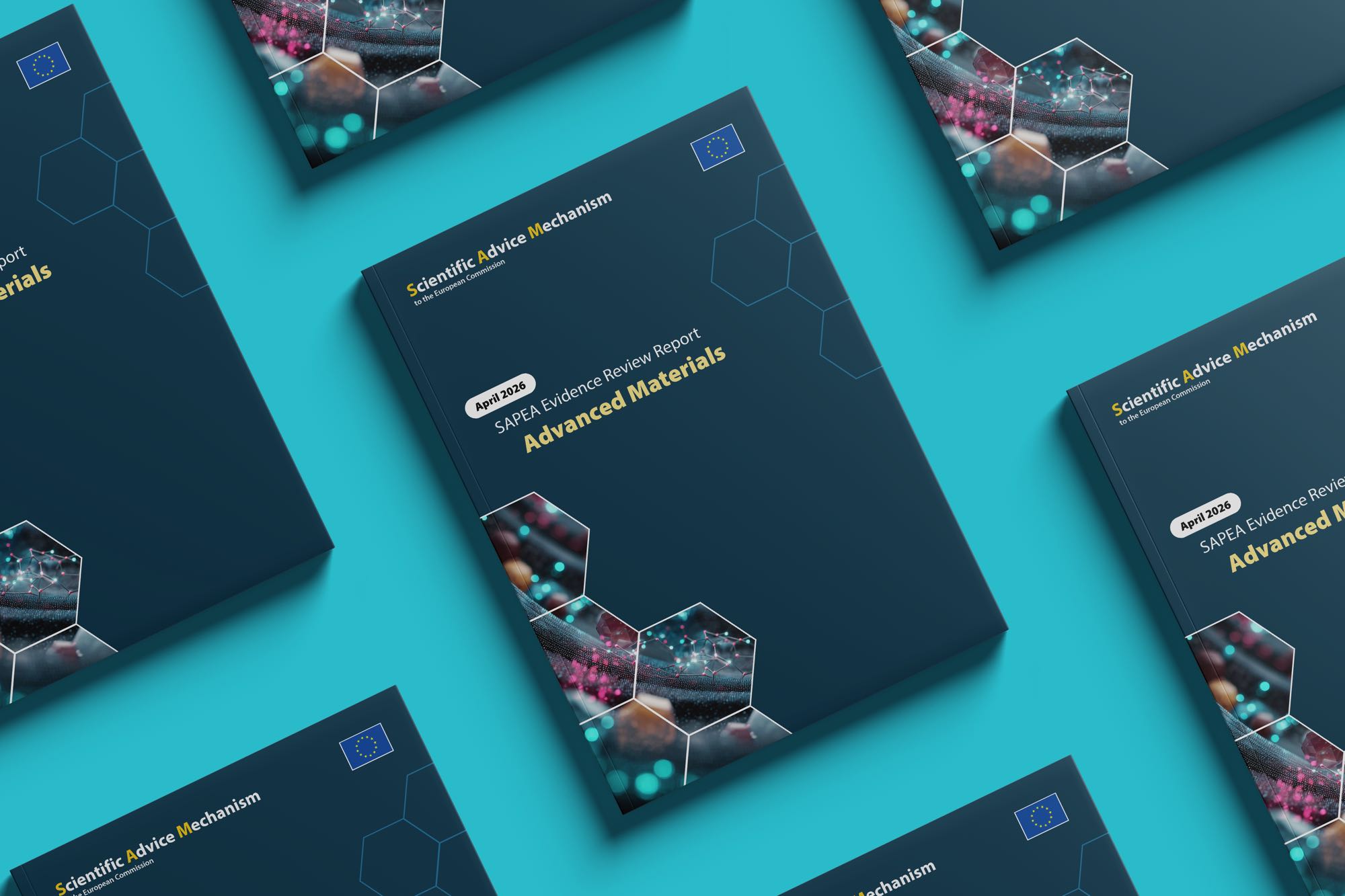
A group of renowned scientists nominated by European academies through the European Commission's Scientific Advice Mechanism, have advised the European Commission on how to strengthen Europe's position in advanced materials development and deployment. The advisory group also included Prof. Dr. Robert Dominko, Head of the Laboratory for Modern Battery Systems, and Assoc. Prof. Dr. Blaž Likozar, Head of the Department of Catalysis and Reaction Engineering.
The advice comes in support of the upcoming Advanced Materials Act. The Science Advice for Policy by European Academies (SAPEA) evidence review report was submitted today in Brussels to Commissioner responsible for startups, research and innovation, Ekaterina Zaharieva.
SAPEA, as a part of the Scientific Advice Mechanism, is a consortium of academy networks that includes over a hundred academies, young academies, and learned societies.
Advanced materials, including superconducting materials for computers, biomaterials for drug delivery, and materials that store or distribute energy more eficiently, are designed to deliver superior performance for specific functionalities. These materials are essential for Europe's autonomy, competitiveness, and resilience.
Co-chair of the SAPEA working group Anke Weidenkaff explained “Europe leads in computational modelling and first-principles simulation codes, yet lacks the high- quality, specialised datasets needed for AI-driven discovery of more sustainable materials. Additionally, Europe's fragmented cross-border economic ecosystems weaken its ability to compete with concentrated advanced materials manufacturing hubs elsewhere.”
Based on the evidence provided by SAPEA, the Group of Chief Scientific Advisors to the European Commission, another key part of the Scientific Advice Mechanism, recommended a range of options for advancing Europe's advanced materials ecosystem.
Safety and sustainability from the outset: Progressive criteria and standards should be applied, with increasing requirements as the technology comes closer to market.
Circular economy and material substitution: Given geopolitical volatility and unreliable supply chains, the EU needs more circular systems that maximise recovery and reuse of materials.
Digitalisation and FAIR data: The EU should develop common data languages, enforce FAIR (Findable, Accessible, Interoperable, and Reusable) data principles across all research, and use AI to connect databases and benefit from existing scientific literature.
Standards as enablers: Europe's strength in standards and regulation can become a competitive advantage, provided standards are designed to enable rather than hinder innovation. Clear, broadly applicable standards reduce time to market and build investor confidence.
Coordinated ecosystems: Transforming scientific advances into market-ready products requires closing the gap between research and industrial manufacturing. The EU must strengthen connections between discovery, scale-up and manufacturing, provide more support to small and medium enterprises, and harmonise regulatory approvals across the continent.
Support fundamental research: Investment must expand to include education pipelines and address staffing and skills shortages. “Investment in fundamental research and human capacity is crucial. Fundamental science requires long-term, predictable funding without expectations of rapid returns” concluded SAPEA co-chair Olli Ikkala.
More information:
scientificadvice.eu/scientific-outputs/advanced-materials-evidence-review-report/
https://scientificadvice.eu/advice/advanced-materials/
https://www.youtube.com/watch?v=9CpTYnaCuM0