

Rivers as Key Pathways of Plastic Waste to the Sea
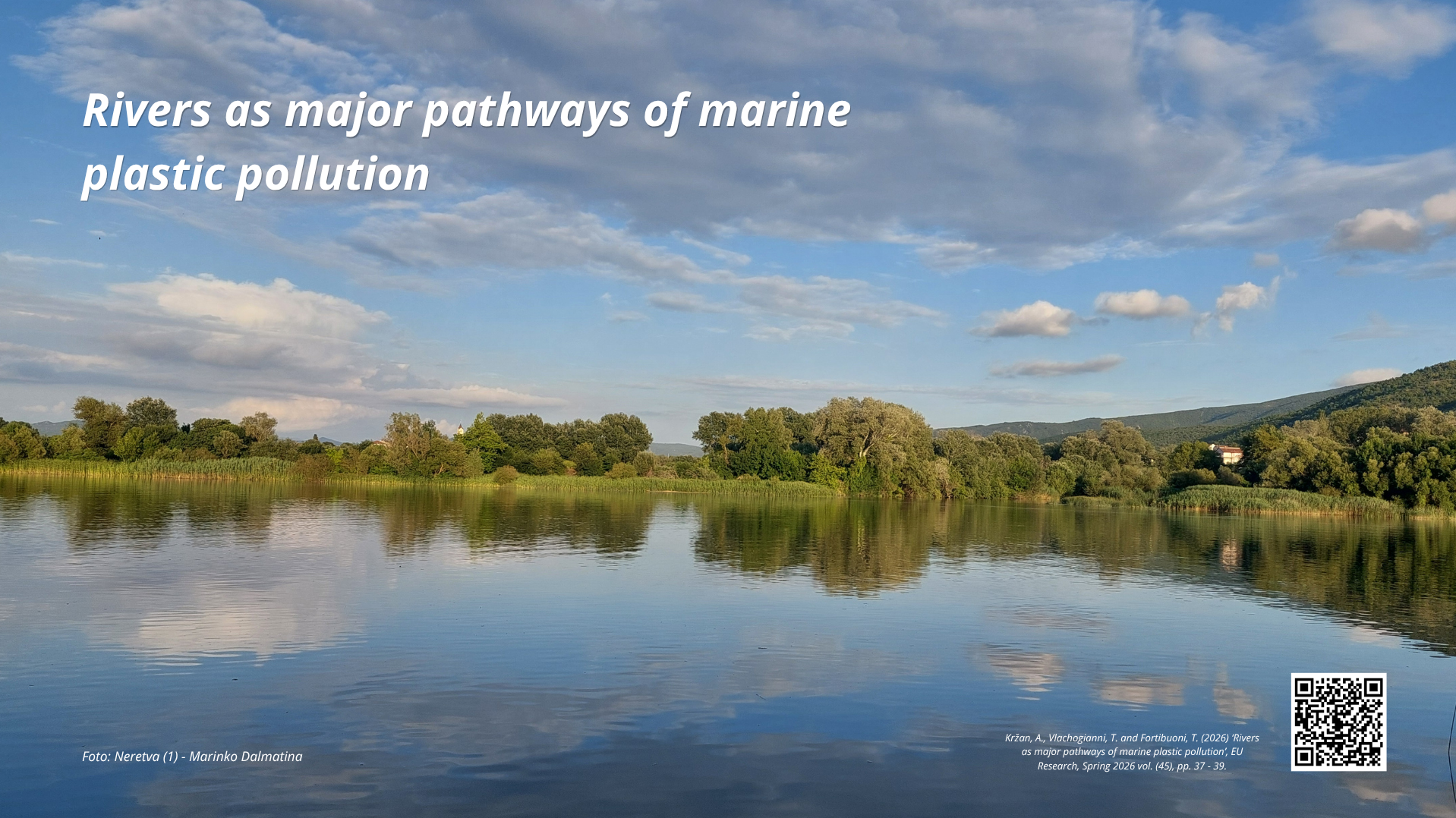
The TETHYS4ADRION project explores how plastic enters river systems, how it travels downstream, and how a better understanding of pollution sources can help protect the marine environment more effectively.
A significant share of the plastic found in the sea actually reaches it through rivers. For that reason, understanding riverine litter is a crucial step in reducing marine plastic pollution. The TETHYS4ADRION project, coordinated by Prof. Andrej Kržan of the National Institute of Chemistry, brings together partners from countries around the Adriatic and Ionian seas to investigate how plastics enter rivers, how they move through aquatic systems, and how this pollution could be prevented or reduced closer to its source.
The project focuses on five rivers across the Adriatic-Ionian region: the Soča, Reno, Neretva, Buna/Bojana and Alfeios. These rivers differ greatly in flow dynamics, landscape, seasonal influences and hydrological conditions, offering researchers a broad view of how plastic waste is transported in different environments. Special attention is also being given to seasonal variation, including rainfall, snowmelt and changing flow regimes, all of which can affect how plastic moves through river systems.
The research looks not only at larger items of litter, but also at macro-, meso- and microplastics, since effective action depends on understanding the diversity of plastic types, their sources and their impacts on aquatic ecosystems. To build this picture, the project uses a range of monitoring methods, including manta nets, visual surveys of floating litter, riverbank assessments, sediment sampling, drones and even GPS trackers placed inside plastic bottles to follow their movement downstream. The goal is to establish a harmonised monitoring approach that can be applied consistently by all project partners.
Prevention is a central priority of the project. Researchers are working to identify which human activities contribute most to river pollution, with poor waste management, tourism and agriculture among the most important sources. Early findings from the Alfeios River in Greece, for example, suggest that a substantial share of litter comes from the agricultural sector, particularly pesticide containers, raising concerns about risks to aquatic ecosystems and biodiversity.
The project is also developing a geodatabase of areas where plastic accumulates or is illegally dumped, while participatory science and public involvement are expected to play an important role in identifying pollution hotspots. The knowledge generated through the project will support recommendations for policymakers and decision-makers at national, regional and European levels, helping shape long-term solutions for reducing plastic pollution in both rivers and seas.
In this way, TETHYS4ADRION contributes not only to a better understanding of how plastic travels from land to sea, but also to the development of practical cross-border solutions for protecting aquatic ecosystems. By combining research, field monitoring and policy support, the project is helping address one of the defining environmental challenges of our time.
You can read the article here: https://tinyurl.com/clanekTETHYS4ADRION