

Machine learning in toxicology
In computational toxicology, we focus on development and application of machine learning methods for prediction of properties of chemicals important for their toxicity assessment. We have a long-term expertise in cheminformatics and neural network modeling based on OECD standards. We design and validate machine-learning models that can reliably estimate toxic effects based on molecular structure. Using these New Approach Methodologies (NAMs), we support initiatives for reduction of in vitro and in vivo tests required for drug development and registration of chemicals. We have developed numerous methods and/or models for assessment of diverse toxicity endpoints; bee and fish acute toxicity, hepatotoxicity, endocrine disruption potential, etc. Our research also involves toxicity assessment of a wide range of chemical sets, including bisphenol derivatives, biocidal active substances, lutein esters, fullerene derivatives. Through these activities, we contribute to the advancement of mechanistic, transparent and animal‑free toxicityassessment, supporting both scientific innovation and sustainable chemical regulation.
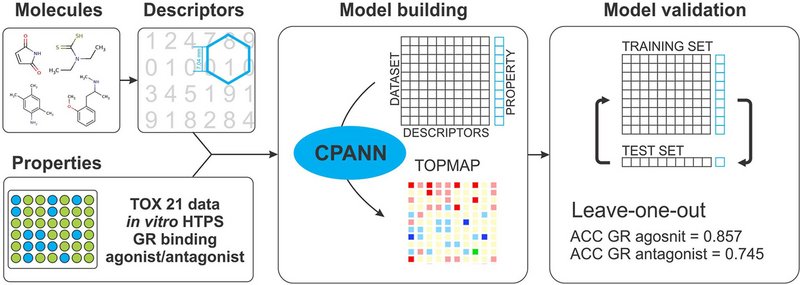
Figure adapted from: https://doi.org/10.3390/toxics11060486.
Representative publications
(1) Vračko, M., Albreht, A. An in silico study of binding of new lutein esters to nuclear endocrine receptors. Food research international. 2026, 236, 119262, DOI: https://www.sciencedirect.com/science/article/pii/S0963996926009397.
(2) Vračko, M.; Lagares, L. M. Clustering of Bisphenols Based on Toxicity Predictions for Key Aquatic Species: Daphnia Magna, Pimephales Promelas, and Oryzias Latipes. Ecotoxicology and Environmental Safety. 2025, 295, 118149. DOI: doi.org/10.1016/j.ecoenv.2025.118149.
(3) Bajželj, B.; Novič, M.; Drgan, V. Utilizing Molecular Descriptor Importance to Enhance Endpoint Predictions. Toxics. 2025, 13 (5), 383. DOI: doi.org/10.3390/toxics13050383.
(4) Drgan, V.; Venko, K.; Sluga, J.; Novič, M. Merging Counter-Propagation and Back-Propagation Algorithms: Overcoming the Limitations of Counter-Propagation Neural Network Models. IJMS.2024, 25 (8), 4156. DOI: doi.org/10.3390/ijms25084156.
(5) Stanojević, M.; Vračko, M.; Sollner Dolenc, M. Development of in Silico Classification Models for Binding Affinity to the Glucocorticoid Receptor. Chemosphere.2023, 336, 139147. DOI: doi.org/10.1016/j.chemosphere.2023.139147.
(6) Stanojević, M.; Sollner Dolenc, M.; Vračko, M. Predictive Models for Compound Binding to Androgen and Estrogen Receptors Based on Counter-Propagation Artificial Neural Networks. Toxics. 2023, 11 (6), 486. DOI: doi.org/10.3390/toxics11060486.
(7) Lagares, L. M.; Vračko, M. Ecotoxicological Evaluation of Bisphenol A and Alternatives: A Comprehensive In Silico Modelling Approach. JoX. 2023,13 (4), 719–739. DOI: doi.org/10.3390/jox13040046.
(8) Fjodorova, N.; Novič, M.; Venko, K.; Drgan, V.; Rasulev, B.; Türker Saçan, M.; Sağ Erdem, S.; Tugcu, G.; Toropova, A. P.; Toropov, A. A. How Fullerene Derivatives (FDs) Act on Therapeutically Important Targets Associated with Diabetic Diseases. Comput Struct Biotechnol J. 2022, 20, 913–924. DOI: doi.org/10.1016/j.csbj.2022.02.006.