

A tetrahelical DNA fold adopted by tandem repeats of alternating GGG and GCG tracts

A group of researchers from Slovenian NMR centre at National Institute of Chemistry, EN-FIST Centre of Excellence and Faculty of Chemistry and Chemical Technology University of Ljubljana has determined a DNA structure adopted by GGGAGCG tandem repeats. These repeats are found in the regulatory region of the PLEKHG3 gene that is related to autism.
Noteworthy, the new structure consisting of four helical strands is not a G-quadruplex, despite the fact that the DNA sequence is guanine-rich. This unexpected and therefore interesting finding was published in the highly respected journal "Nature Communications" (Kocman and Plavec, 2014 doi:10.1038/ncomms6831).
It is amazing that after several decades of structural studies on guanine-rich sequences we have discovered a structure which should by all known rules form G-quadruplex. In contrast to the expected structure in which two G-quartets would sandwich a GCGC-quartet, a new tetrahelical structure has been found. New guanine-rich structure does not only extend the current repertoire of known DNA structures, but provides a fundamental insight into forces that drive folding of oligonucleotide DNA chain. In-depth understanding of forces of recognition via hydrogen bonds with respect to stacking of heterocyclic moieties of nucleotide residues will help in the advancement of science. At the same time, the new structure represents a warning to researchers that use mainly bioinformatics tools that comparison of primary sequences of polymer molecules alone is not sufficient to infer their biological role and similarity of their folds. Knowledge of 3D structures is crucial for molecular understanding of biological function.
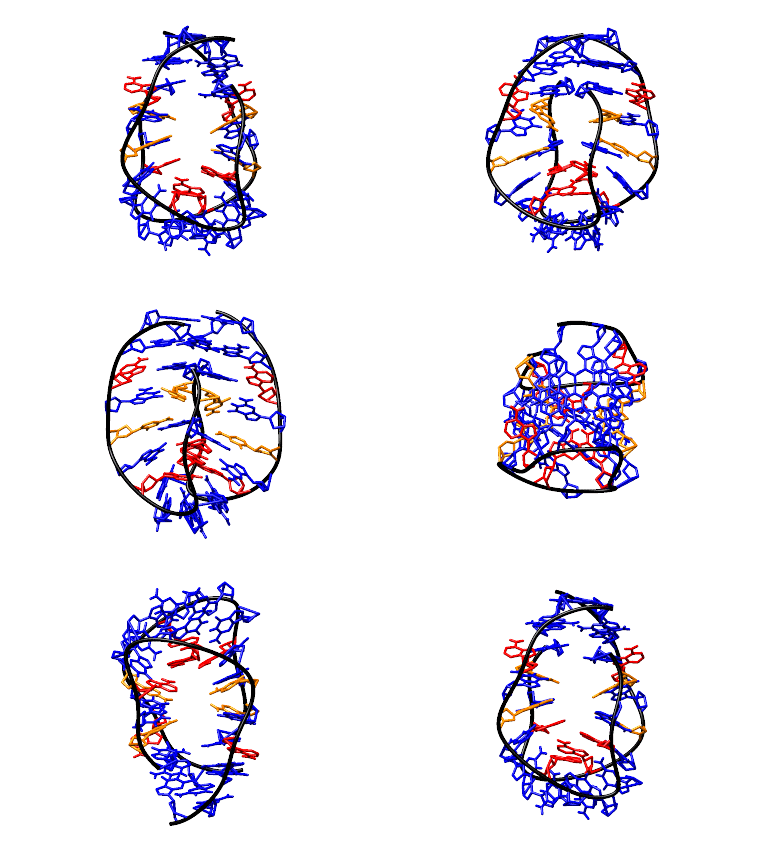
Details of the study and article are available at the link below.
www.nature.com/ncomms/2014/141215/ncomms6831/full/ncomms6831.html