
News

Aliphatic hyperbranched polyesters based on 2,2-bis(methylol)propionic acid—Determination of structure, solution and bulk properties
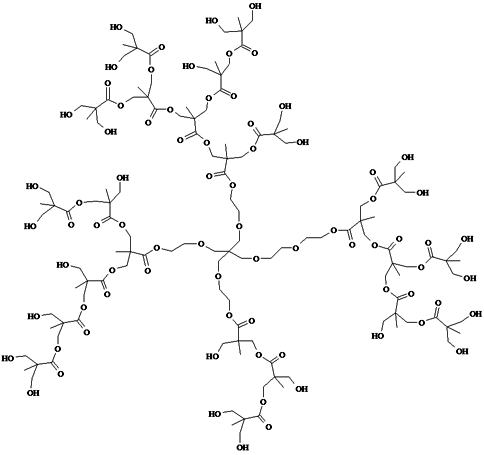
Aliphatic hyperbranched polyesters based on 2,2-bis(methylol)propionic acid possess unique properties as a consequence of specifically highly branched structure and a large number of functional groups. They are very interesting for uses in a wide variety of applications from additives in technical products for large-scale industrial applications to high-tech applications, e.g. carriers in drug delivery systems for biomedical applications.

Dr. Ema Žagar and Prof. Dr. Majda Žigon from the Laboratory for Polymer Chemistry and Technology, published recently some prominent articles on the structure and molar mass determination of aliphatic hyperbranched polyesters, their solution and bulk properties. In this publication they give a comprehensive review of achievements over the past few years on structural characteristics, properties, characterization and application of aliphatic hyperbranched polyesters. Results indicate the complexity of the composition and structure and multi-dimensional distributions of various properties. They serve as a basis for improved understanding of the structure-property relationships in hyperbranched polymers. The article was published in the prestigious journal on polymer science »Progress in Polymer Science« (impact factor 23.75) (doi:10.1016/j.progpolymsci.2010.08.004), and is available at sciencedirect.com/science/journal/00796700.


Aliphatic hyperbranched polyesters based on 2,2-bis(methylol)propionic acid possess unique properties as a consequence of specifically highly branched structure and a large number of functional groups. They are very interesting for uses in a wide variety of applications from additives in technical products for large-scale industrial applications to high-tech applications, e.g. carriers in drug delivery systems for biomedical applications.

Dr. Ema Žagar and Prof. Dr. Majda Žigon from the Laboratory for Polymer Chemistry and Technology, published recently some prominent articles on the structure and molar mass determination of aliphatic hyperbranched polyesters, their solution and bulk properties. In this publication they give a comprehensive review of achievements over the past few years on structural characteristics, properties, characterization and application of aliphatic hyperbranched polyesters. Results indicate the complexity of the composition and structure and multi-dimensional distributions of various properties. They serve as a basis for improved understanding of the structure-property relationships in hyperbranched polymers. The article was published in the prestigious journal on polymer science »Progress in Polymer Science « (impact factor 23.75) , 36 (2011) 53–88, (doi:10.1016/j.progpolymsci.2010.08.004). Link to article.

The National Institute of Chemistry, boasting over 75 years of tradition and scientific excellence, is setting a new…
Center for Development, Demonstration and Training for Carbon-Free Technologies will be established to ensure the…
Left: 3D structure of PC-PLC. Right: Synergistic effect of PC-PLC on LLO membrane binding and pore formation. Unique…
The chemical regulation of human cells by small molecules plays an important role in the design of new gene and cell…
The discovery of the CRISPR/Cas system was awarded the 2020 Nobel Prize in Chemistry in 2020. Researchers from the…
Accessibility(CTRL+F2)
color contrast
text size
highlighting content
zoom in