

Bacterial endotoxin receptor “moonlighting” as an oxidative stress sensor
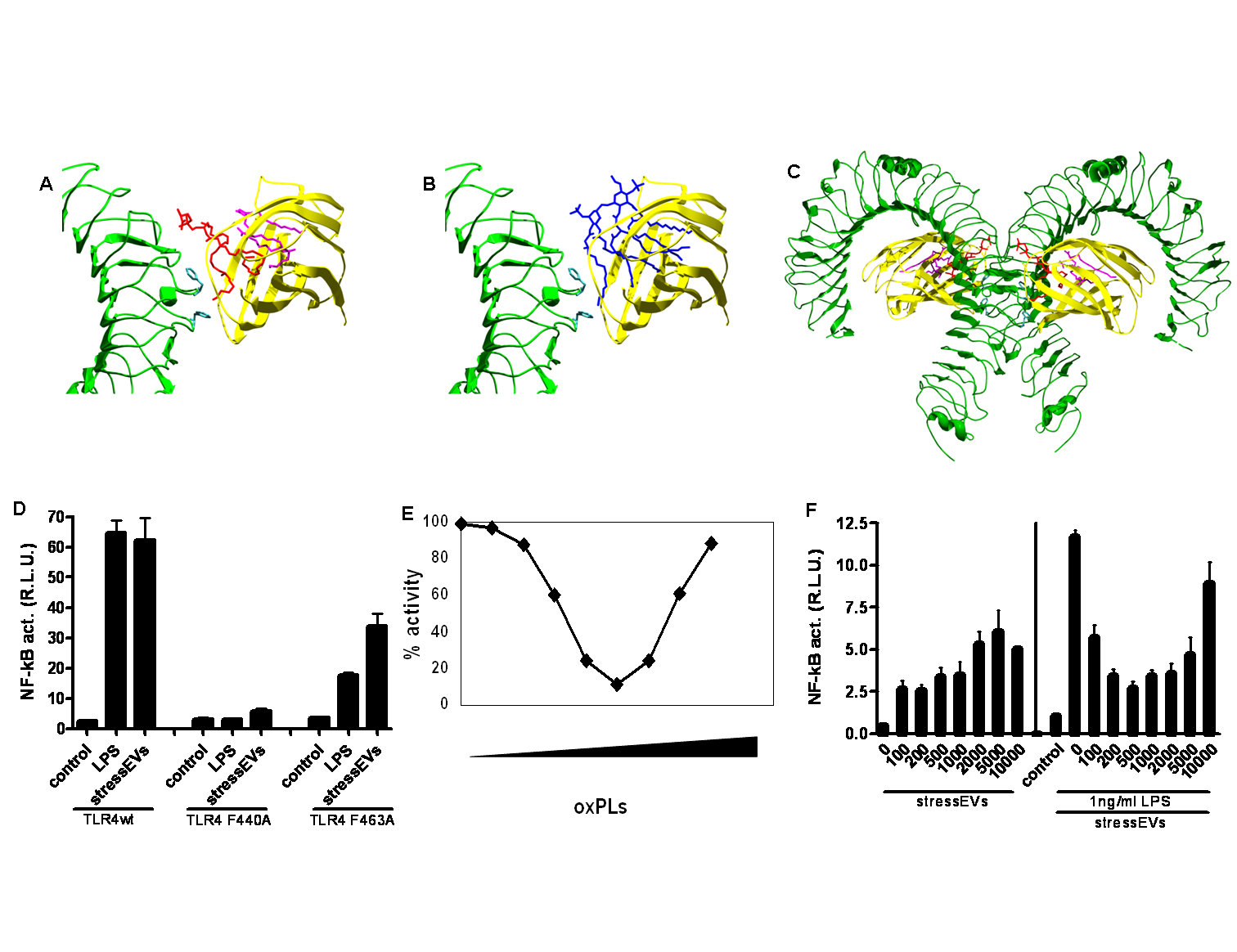
[Translate to English:] Primerjava molekulskih modelov aktivacije receptorja TLR4 z oksidiranim fosfolipidom (A) in endotoksinom (B).
Receptor of the innate immune response Toll-like receptor 4, which senses bacterial endotoxin has been reported to have a role in numerous pathological conditions even in the absence of any detectable bacteria. Researchers from the National institute of chemistry in Ljubljana, Slovenia, discovered that the receptor TLR4 acts also as a sensor of the oxidative stress recognizing oxidized phospholipids, establishing its widespread role in inflammatory diseases.
Humans require a highly efficient immune system to survive in an environment full of bacteria, viruses and other dangerous microorganisms. The immune system provides protection through the production of antibodies and cells that can recognize and kill microorganisms and remove infected cells. In addition to antibodies and T-cells, which are highly variable and develop differently in each individual, human cells also possess a range of genetically encoded receptors, which recognize molecules that are characteristic for dangerous micro-organisms in a more generic way, and quickly activate an immune response. Toll-like receptors are a family of innate immune receptors that recognize bacterial flagelli, nucleic acids of viruses, components of the bacterial envelope, such as lipopeptides and endotoxins of Gram-negative bacteria. For the discovery of the role of the Toll-like receptors and specifically Toll-like receptor 4 (TLR4) in immune response Bruce Beutler, together with Jules Hoffman and Ralph Steinman received the 2011 Nobel Prize for medicine. In addition to microorganisms, receptors of the innate immune response also recognize the tissue damage in the absence of any infectious microorganisms. TLR4 receptor is a special receptor, since its role has been shown in various non-infectious diseases where no presence of bacteria has been demonstrated, such as the rheumatoid arthritis, atherosclerosis, asthma, neuropathic pain, cancer and many others. Indeed, several very different endogenous molecules activating TLR4 have been proposed as the signals of danger.
Researchers from the Laboratory of Biotechnology at the National institute of Chemistry in Ljubljana, Slovenia led by Roman Jerala wondered how could a single receptor recognize so many different molecules. Manček-Keber, the lead author of the study, discovered that components of blood plasma from patients with rheumatoid arthritis, unlike from healthy people, activated the receptor TLR4. Upon the detailed analysis of the mechanism of activation they found that this receptor actually identifies extracellular vesicles that contain oxidized phospholipids, resulting from the oxidative stress, which is generally present at inflammation and occurs in a large number of different diseases. Surprisingly, Manček-Keber found that the partial oxidation of cellular lipids triggered the strongest response, while further oxidation of the lipid led to the loss of activation. The underlying reason for the recognition of bacterial endotoxin as well as oxidized phospholipids lies in the structural mimicry of the two molecule types. Analysis of the gene expression response of human cells showed that the endotoxin or oxidized lipids affect the transcription of more than 8,000 genes, however, activation of the same receptor by the products of the oxidative stress triggered significantly different expression pattern, upregulating some genes that are important for the regeneration. Jerala anticipates that results of this study could lead to development of new treatments of inflammatory diseases using inhibitors of TLR4.
Journal reference:
Toll-like receptor 4 senses oxidative stress mediated by the oxidation of phospholipids in extracellular vesicles. Mateja Manček-Keber, Mojca Frank-Bertoncelj, Iva Hafner-Bratkovič, Anže Smole, Mateja Zorko, Nina Pirher, Silvia Hayer, Veronika Kralj-Iglič, Blaž Rozman, Nejc Ilc, Simon Horvat, Roman Jerala.
Science Signaling Jun 2015, 8, ra60.