

Comparative genomics reveals high biological diversity and specific adaptations in the industrially and medically important fungal genus Aspergillus
[Translate to English:] Pregled genomov rodu Aspergillus in primerjava vrst
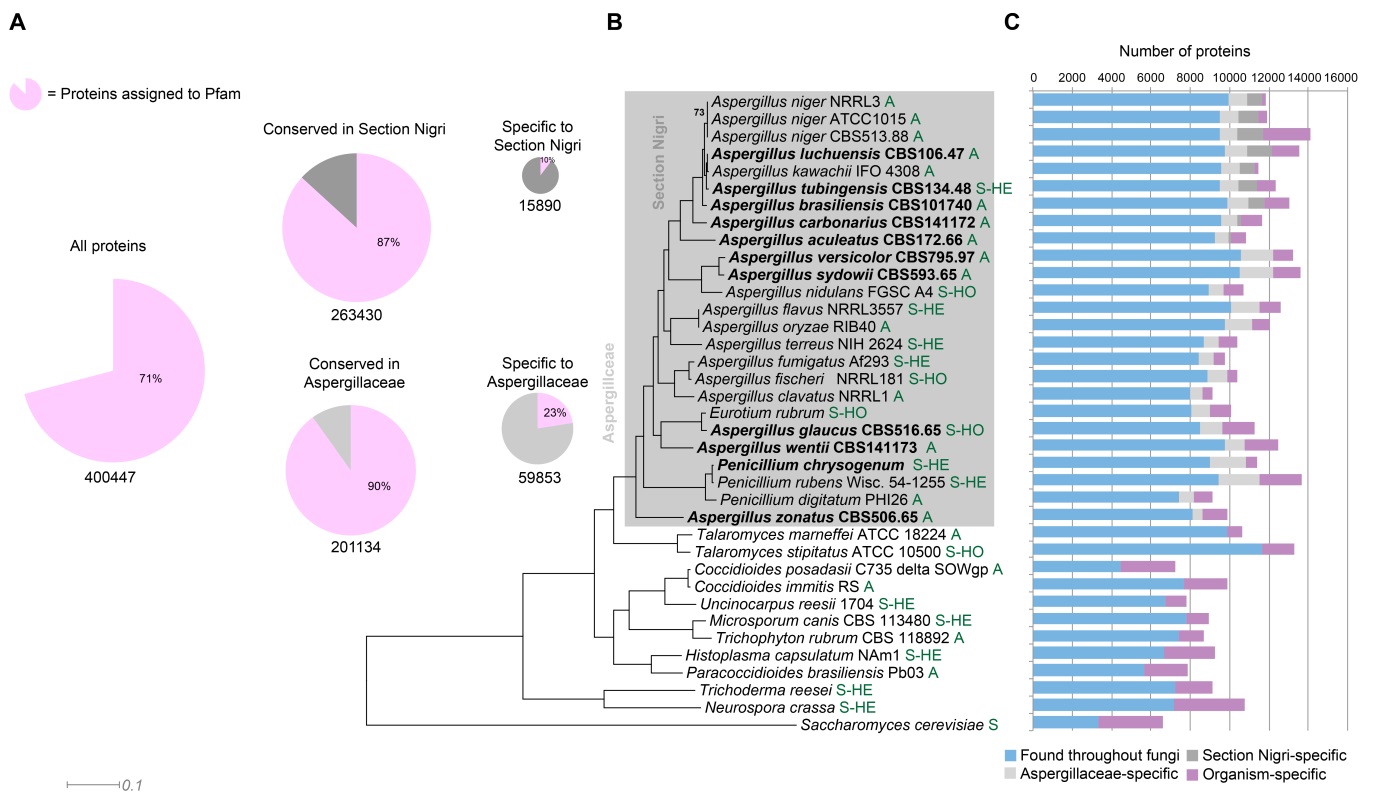
The fungal genus Aspergillus is of critical importance to humankind. Species include those with industrial applications, important pathogens of humans, animals and crops, a source of potent carcinogenic contaminants of food, and an important genetic model. Publication, in which we have generated genome sequences for ten novel, highly diverse Aspergillus species and compared these in detail to sister genera, is a result of a broad fungal community. The comparative genomics and experimental study, presented here, allows for the first time a genus-wide view of the biological diversity of the aspergilli. Comparative studies of key aspects of fungal biology, including primary and secondary metabolism, stress response, biomass degradation, and signal transduction, revealed both conservation and diversity among the species. This revealed several highlights, such as the potential for sex in asexual species, organic acid production genes being a key feature of black aspergilli, alternative approaches for degrading plant biomass, and indications for the genetic basis of stress response. Many aspects of biological differences between fungal species cannot be explained by current knowledge obtained only from genome sequences and be linked to differences in phenotype. Insights gained could be exploited for biotechnological and medical applications of fungi.
Authors: Ronald de Vries, … Gregor Anderluh, Nada Kraševec, Kristina Sepčić, …Igor V. Grigoriev (all together 117 authors)
Genome Biology (2017) 18:28 DOI 10.1186/s13059-017-1151-0, IF(2015)=11,313
The article: https://genomebiology.biomedcentral.com/articles/10.1186/s13059-017-1151-0