Discovery of the Slimness Gene Opens New Therapy Possibilities for Obesity-Related Diabetes
In the modern world, obesity is becoming an increasing health and social problem since it is tightly linked to a shortened life expectancy and the development of chronic diseases, such as type 2 diabetes. In a study published in the first experimental magazine NATURE MEDICINE (impact factor 28.2), with the lead author being Prof. Dr. Simon Horvat (Institute of Chemistry – Department of Synthetic Biology and Immunology/University of Ljubljana – Biotechnical Faculty), a new gene called TST (thiosulfate sulfurtransferase) participating in the defence against the development of obesity and type 2 diabetes was discovered in cooperation with Dr. Morton from Scotland (University of Edinburgh).
The basic findings were the genetic and molecular analyses of “slim” and “fat” mouse lines that have been separated into a lower or higher body fat percentage for over 60 generations. In that way, the “natural” genetic variants of either the “slim” or “fat” genes were accumulating in one line or the other, which allows the more efficient discovery of new genes determining resistance to or risk of obesity. Obesity and slimness are after all two complex features depending on the joint contribution of a large number of genes, environmental factors, and their mutual effects. Since there are a lot of hereditary factors and the contribution of a single gene is small, the discovery of individual genes is a major challenge, while the progress of new know-how and especially applications in medicine and other useful fields us slow. Therefore every new discovery of genes or systems that regulate body weight, as well as metabolic disorders, represents a breakthrough in the identification of a range of casual factors of a certain complex feature or illness.
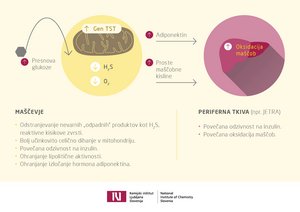
The study in question discovered that the TST level is increased in the fatty tissue of slim mice, which was the determining factor for the development of resistance to obesity and diabetes. Those results were confirmed with their transgenic models. An increased TST level improves the metabolic “health” via its effect on the processes of cellular respiration, the detoxification of dangerous oxygen species and other waste products, as well as the release of hormones for the decomposition of fat and energy consumption.
It is interesting that TST is an enzyme that has been known for a long time. After all, it was described more than 80 years ago. However, so far it has not been linked to the regulation of body weight and metabolic disorders. It was known as our natural protection against cyanide – otherwise a highly dangerous toxin that can be found in most common foodstuffs in smaller quantities. Physicians actually “take advantage” of this function of the TST gene in the treatment of severe cyanide poisoning, promoting its function by adding a simple salt, thiosulfate, which functions as an antidote. The scientists conducting this study believed that adding this salt to diabetic and fat mice might also stimulate the TST gene, thus also stimulating favourable metabolic effects, which was confirmed in the experiment.
From the point of view of the potential applicability of this finding in human medicine, the result that the TST level was increased in the fatty tissue of slim and healthy people while it was low in fat and diabetic people is important. This test was reproducible in three populations from different countries (Austria, Scotland, Iceland). Scientists expect that new and more effective TST stimulating medications or therapies with new synthetic biology approaches will contribute to the development of complementary new therapies for obesity-related diabetes. Since such medications target the gene in the peripheral tissues, such as fatty tissue, rather than the complex body weight control system in the brain, the researchers of the study believe that such therapies could be developed faster and that they could be safer.
The study, mostly financed with the funds of the Slovenian Research Agency (ARRS) and the British “Wellcome Trust” foundation, was published on 6 June 2016 in the Nature Medicine magazine.