Identification of a new obesity gene involved in adipose tissue development

Obesity is becoming a major health and social issue as it presents a strong risk factor for a number of chronic diseases, including diabetes, cardiovascular diseases, cancer that are linked to increased mortality rates.
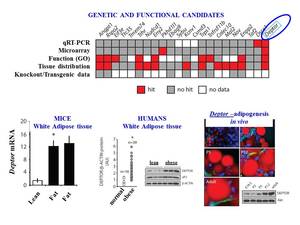
Prof. Simon Horvat from the Laboratory of Biotechnology (L12), who initially discovered a gene by genetic analyses of obese and lean lines of mice, has shown in an international collaborative study that protein DEPTOR plays a major role in regulation of fat tissue development. Researchers demonstrated that mice carrying the »obese« genetic variant express increased levels of DEPTOR and accumulate more fat tissue. Similary, analyses of fat tissue from obese humans confirmed the animal results. This study discovered a new level of regulating fat tissue development via peripheral systems and gives a promising basis for development of new approaches for more efficient obesity therapies.
This new discovery has been published in one of the leading journals at the field of metabolism, CELL Metabolism (Impact factor 2010 = 13.7).
This new discovery has been published in one of the leading journals in the field of metabolism, CELL Metabolism (Impact factor 2010 = 13.7). Supplemental Information.
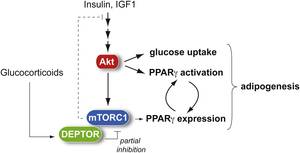
► The Deptor locus is part of a QTL linked to obesity/leaness in mice ► DEPTOR expression is induced by glucocorticoids during adipogenesis ► DEPTOR levels are elevated in adipose tissue of obese humans ► DEPTOR promotes adipogenesis by balancing Akt and mTORC1 activation