

Inhibiting lactate generation by cancer cells
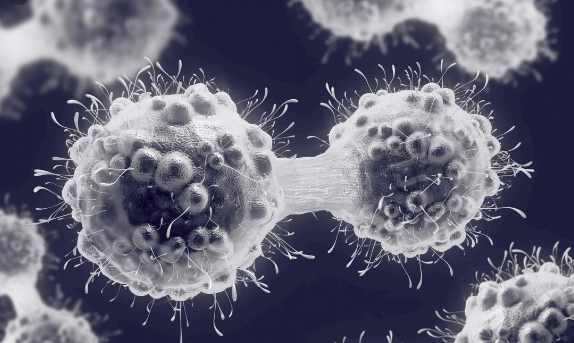
Ljubljana, April 28, 2020 - Cancer cells consume more glucose than normal cells and convert most of glucose into lactic acid. Lactate has an important role for the survival of cancer calls in tumors. It causes acidosis of extracellular matrix that enables immune escape by the cancer cells, triggers angiogenesis (growth of blood vessels), and migration of the cancer cells that result in metastases. Therefore, it's of utmost importance to prevent the generation of lactate by the cancer cells. Inhibiting lactate generation would increase the efficiency of immuno-therapy and radio-therapy however in the best case scenario lactate removal form the tumor might enable the intrinsic immune cells to destroy cancer cells.
The Warburg effect is characterized by deregulated metabolic flux through glycolysis. By our previous studies we found that posttranslational modification of 6-phosphofructo-1-kinase (PFK), the key regulatory enzyme of glycolysis might be the pivotal factor for that. The enzyme that is modified by proteolytic cleavage of the C-terminus becomes insensitive to feed-back inhibition while the active site located at the N-terminus remains intact. Modified, highly active enzyme deregulates metabolic flux and triggers an increase of glycolytic metabolites levels as well as redundant NADH synthesis. Increased NADH levels might unbalance redox potential in the cells therefore the cells must rapidly re-oxidize surplus of the NADH in order to survive. It is solved by NADH re-oxidation in a reaction of pyruvate reduction into lactate. Lactate generation might be therefore prevented by partial inhibition of the modified PFK enzyme in the cancer cells. Several years ago, first 3-D crystal structure of human PFK enzyme was published.
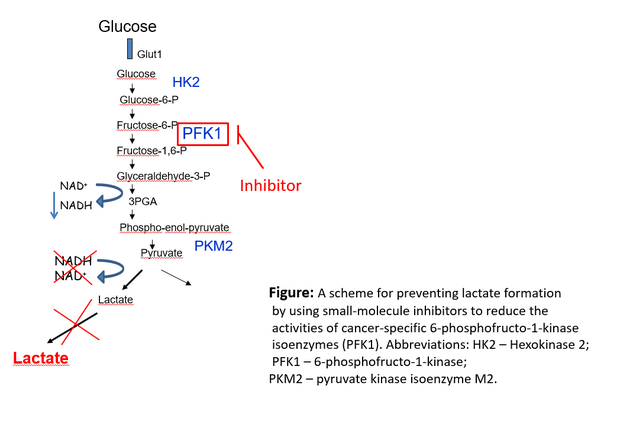
In collaboration with the colleagues from the laboratory of Molecular Modeling of the Theoretical department at the National Institute of Chemistry, we used a super computer for screening a database of small molecules that attach to the ATP binding site of the PFK. As a result, 33 compounds were selected that were commercially available. All compounds were first testes for the inhibition of isolated human modified PFK enzyme, followed by testing the inhibition of lactate generation by tumorigenic cells. Seven compounds were found to effectively reduce lactate excretion and showed negligible cytostatic and cytotoxic effects. Using specific molecular biology techniques, PFK enzyme was confirmed to be a target of inhibition that resulted in decreased metabolic flux. The aim of the PFK inhibition was not to completely block the enzyme activity but just to reduce its activity to the level found in the normal human cells.
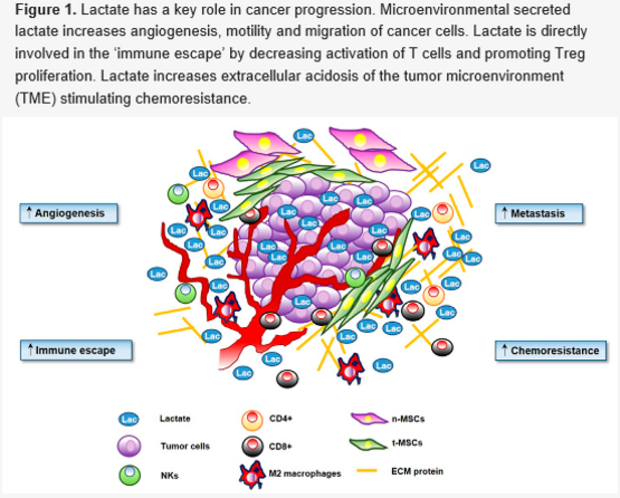
Source: Cells 2020, 9(2), 510; doi.org/10.3390/cells9020510
In August 2019, the intellectual property rights of seven compounds were protected by filing a PCT/EPO patent application. At present, we are actively looking for industrial partner willing to finance the experiments for concluding the pre-clinical trials and/or perhaps negotiate the transfer of intellectual property rights.
Link: patents.google.com/patent/WO2020030613A1/en
For further information please contact: matic.legisa[at]ki.si