

How does the major Kiwifruit allergen trigger inflammation?
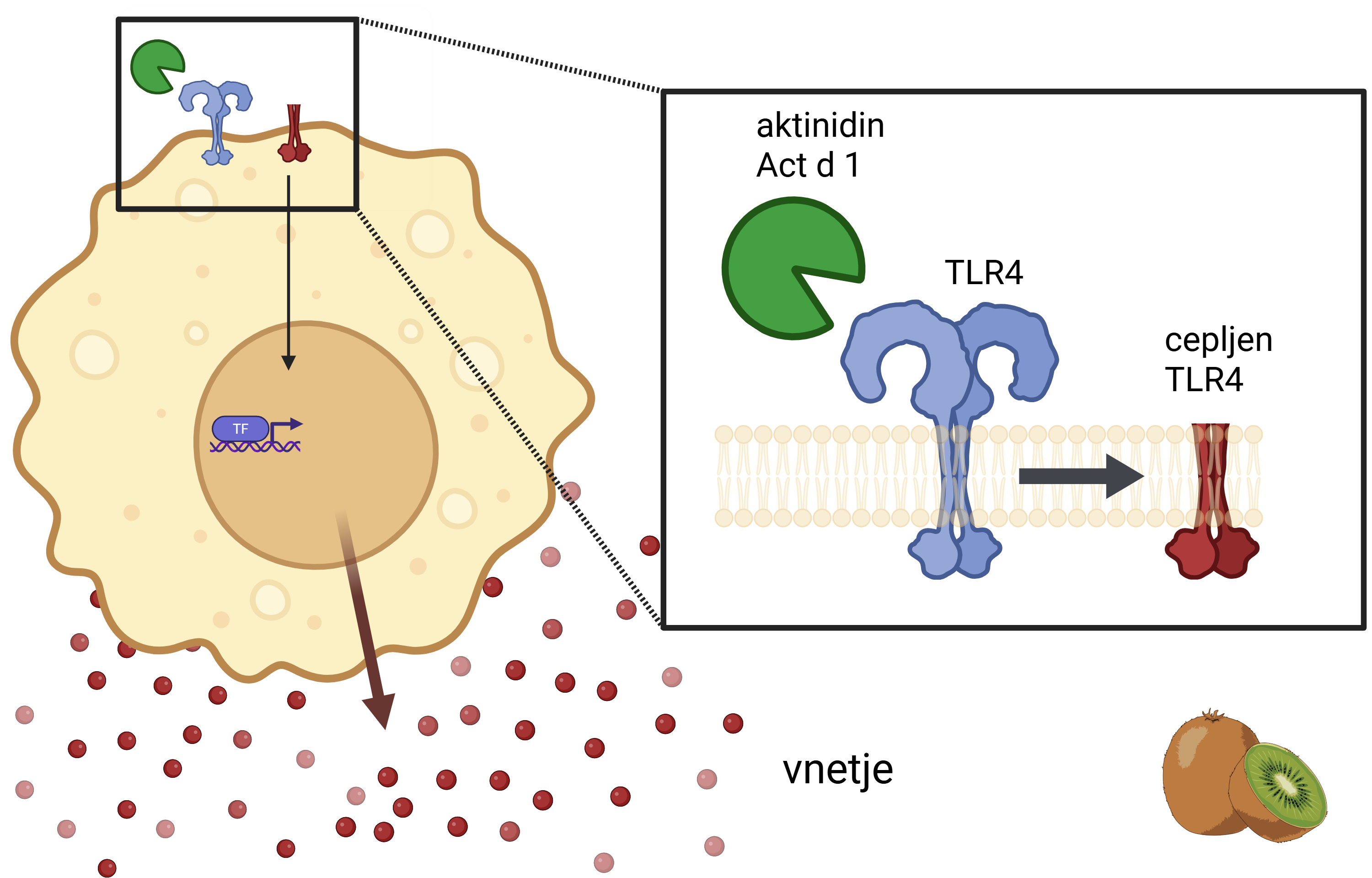
Molecular mechanism of TLR4 activation by the major kiwifruit allergen. Created in https://BioRender.com
Inflammation is a fundamental protective response of the body, but it also plays an important role in the initiation and persistence of allergic disease. Early activation of innate immunity triggers the production of cytokines and other inflammatory mediators that shape the local tissue environment and influence the subsequent immune response. In allergy, such an inflammatory environment can promote the activation and recruitment of immune cells and contribute to the establishment and amplification of allergic responses. Understanding the earliest events that initiate inflammation upon allergen exposure is therefore important for identifying the factors that contribute to allergenic potency and explaining why certain substances become allergens.
Researchers from the National Institute of Chemistry and the University of Belgrade have uncovered a new mechanism by which protease allergens can trigger innate immune responses. They found that actinidin (Act d 1), a major kiwifruit allergen and proteolytic enzyme, activates the innate immune receptor TLR4 in an unexpected way, through proteolytic cleavage of its extracellular domain. The discovery, published in Allergy, reveals a previously unrecognized mechanism of TLR4 activation directly linking allergen protease activity to inflammatory signaling.
Protease allergens can, through their enzymatic activity, actively modify the tissue environment and initiate inflammation. Actinidin is a cysteine protease that retains substantial enzymatic activity even after exposure to the harsh conditions in the gastrointestinal tract. Although its ability to disrupt epithelial integrity has been well documented, the receptor through which it can directly trigger inflammatory responses in immune cells had remained unknown.
The researchers demonstrated that actinidin induces the production of proinflammatory cytokines via the TLR4 receptor. TLR4 activation is crucial for the response against bacterial endotoxin; however, the study demonstrated that actinidin does not engage the TLR4 receptor through classic receptor-ligand interaction. Instead, the study supports a model in which proteolytic removal of the TLR4 ectodomain releases a structural constraint that normally helps maintain the receptor in an inactive state.
The discovery broadens our understanding of how allergens can engage innate immunity. Rather than acting solely as conventional receptor-binding ligands, protease allergens may directly remodel immune receptors through their enzymatic activity and thereby initiate inflammatory signaling. This mechanism provides a new perspective on the early events that drive allergic inflammation and highlights proteolytic activity as an important determinant of allergen immunogenicity.
Link: https://onlinelibrary.wiley.com/doi/10.1111/all.70456
Contact: iva.hafner(at)ki.si