

Oxidative Damage Disrupts the Balance Between Duplex DNA and G-Quadruplex Structures
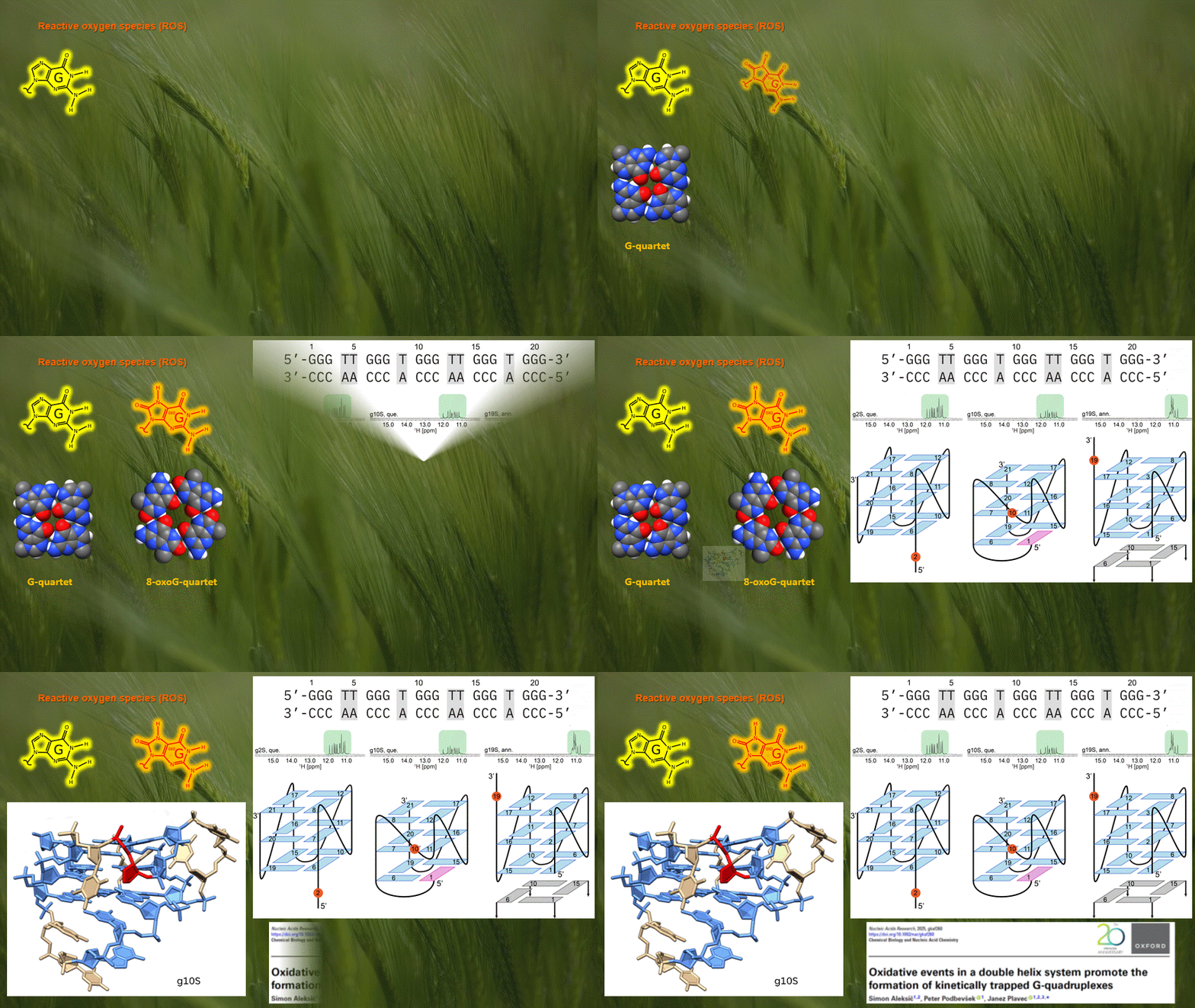
Guanine-rich oligonucleotide sequences can adopt four-stranded G-quadruplex structures. These sequences are highly susceptible to oxidative damage due to the low redox potential of their constituent guanine nucleotides. Oxidative lesions of guanine residue exhibit perturbations in the position of hydrogen-bond donors and acceptors, which can impair the formation of G-quadruplexes.
In this paper we have studied the effect of guanine oxidation in model systems comprised of a G-rich as well as a complementary C-rich DNA strand to discern how oxidative damage can destabilize double-stranded DNA and promote G-quadruplex formation. Our data show that G-rich strands containing oxidative lesions can still adopt the G-quadruplex fold due to the presence of spare G-tracts, which rescue the damaged G-tracts via either full or partial replacement. However, most of the observed G-quadruplexes are kinetically trapped structures and the preferred equilibrium state of the two-stranded constructs is double-stranded DNA.
Our findings shed light on how oxidative damage influences the dsDNA:G4 equilibrium and provide a foundation for further studies into the roles and functions of nucleic acids under oxidative stress conditions.
More: https://academic.oup.com/nar/article/53/6/gkaf260/8106306
Contact: