

Oxygen vacancy superstructures in reduced anatase thin films
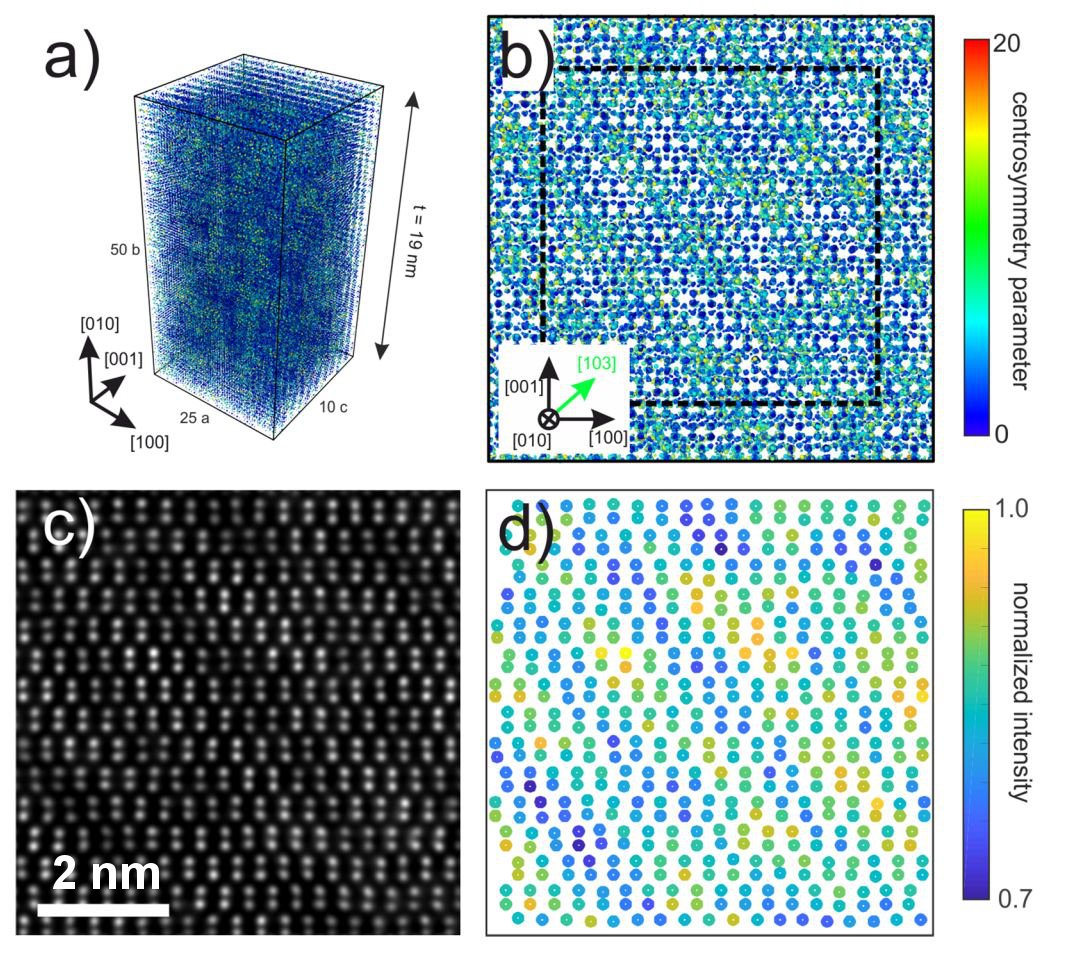
Oxygen vacancies are known to play a crucial role in tuning the physical properties and technological applications of titanium dioxide TiO2. Over the last decades, defects in substoichiometric TiO2 have been commonly associated with the formation of TinO2n−x Magnéli phases, which are extended planar defects originating from crystallographic shear planes.
By combining advanced transmission electron microscopy techniques, electron energy-loss spectroscopy and atomistic simulations, the authors from the Institute of Materials, CNR, Trieste, University of Milan and National Institute of Chemistry reach new understanding of the oxygen vacancy induced structural modulations in TiO2 anatase, ruling out the earlier shear-plane model. Structural modulations are instead shown to be due to the formation of oxygen vacancy superstructures that extend periodically inside the films, preserving the crystalline order of anatase.
Elucidating the structure of oxygen defects in anatase is a crucial step for improving the functionalities of this material system and to engineer devices with targeted properties.
ONLINE LINK:
https://pubs.acs.org/doi/10.1021/acs.nanolett.0c02125