

Prof. dr. Roman Jerala awarded the ERC Advanced Grant 2017
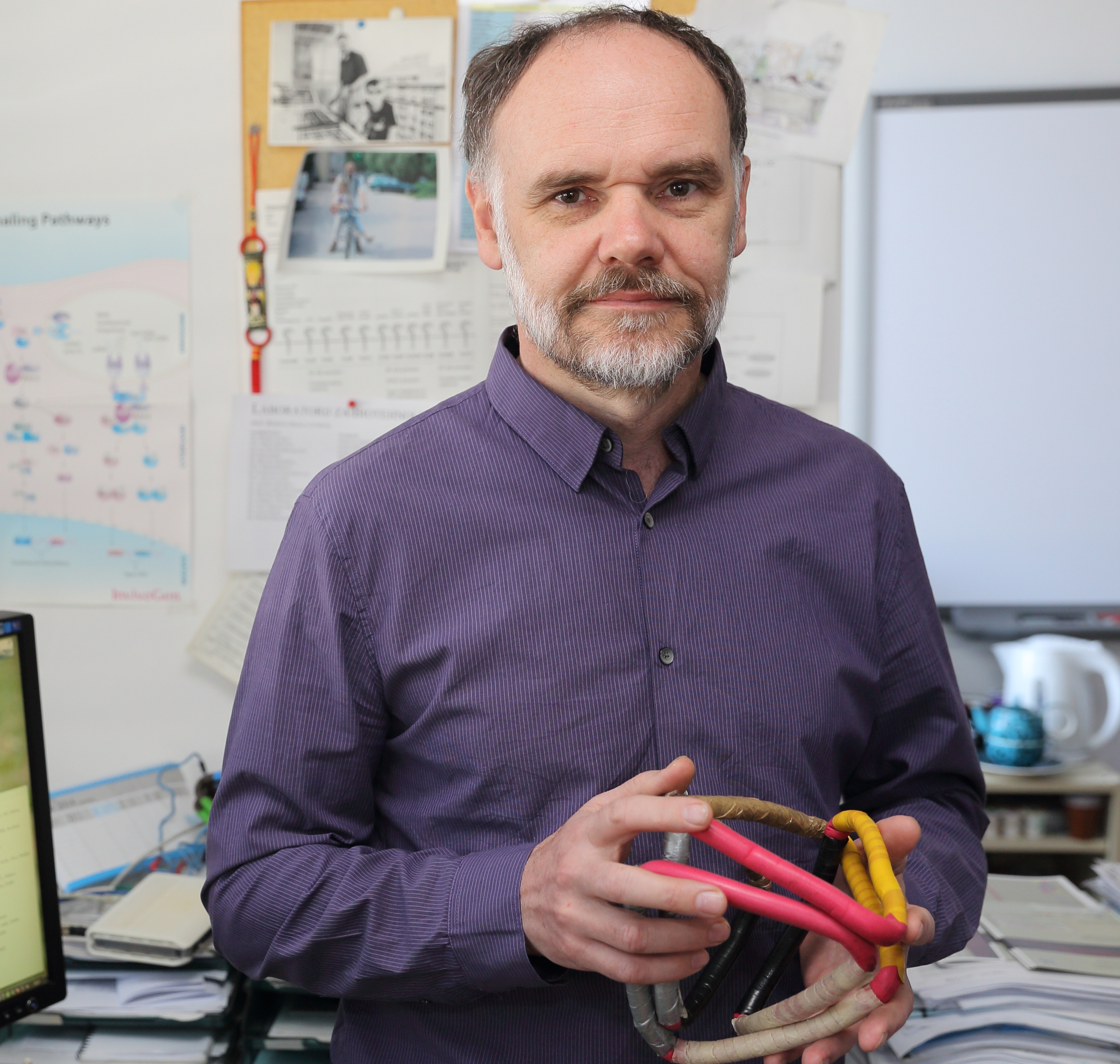
We are delighted to inform you that the results of the ERC Advanced Grant 2017 call have now been released and that in the intense competition, the application of the well-established scientist Professor Roman Jerale, Head of the Department of Synthetic Biology and Immunology at the National Institute of Chemistry, was selected for funding. The results were officially published today, 6th April. It is a great honour for us that the European Commission highlighted the MaCChines project out of a group of seven projects, presented upon the announcement of the results of the call.
The scope of the success of the Slovenian researcher is best illustrated by the fact that the European Research Council (ERC) will only finance 12% of the project applications from exceptional researchers from more than 2167 applications for the implementation of own research projects in Europe; only 1% of the approved projects are from the new EU member states.
The five-year project is called “MaCChines – Molecular machines based on coiled-coil protein origami”, and the researcher will receive 2.5 million euros. Prof. dr. Roman Jerala is one of the six Slovenian representatives who have been successful in this call so far; furthermore, it involves the first Slovene ERC project in the field of life sciences and chemistry. With this project, the National Institute of Chemistry reinforces its position as a leading institute in the field of life sciences and chemistry research at the global level.
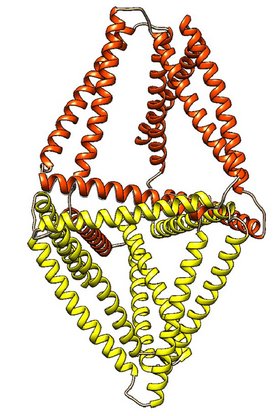
The aim of the project is to develop the principle of the preparation of artificial proteins based on coiled-coil protein origami (CCPO) and to determine the potentials of this approach and what three-dimensional structures can be made in this respect. It is a completely new type of protein design that is modular and differs from that based on natural proteins – it was developed by the group of prof. Jerale as the first of its kind in the world. Despite the fact that these are artificial proteins, such protein cages can be obtained in cells without harmful effects, which gives them great potential for medical and technological use, the delivery of medicines, sensors and new materials.
- Link: ERC Advanced Grants 2017