

"Retired" Twingo to museum
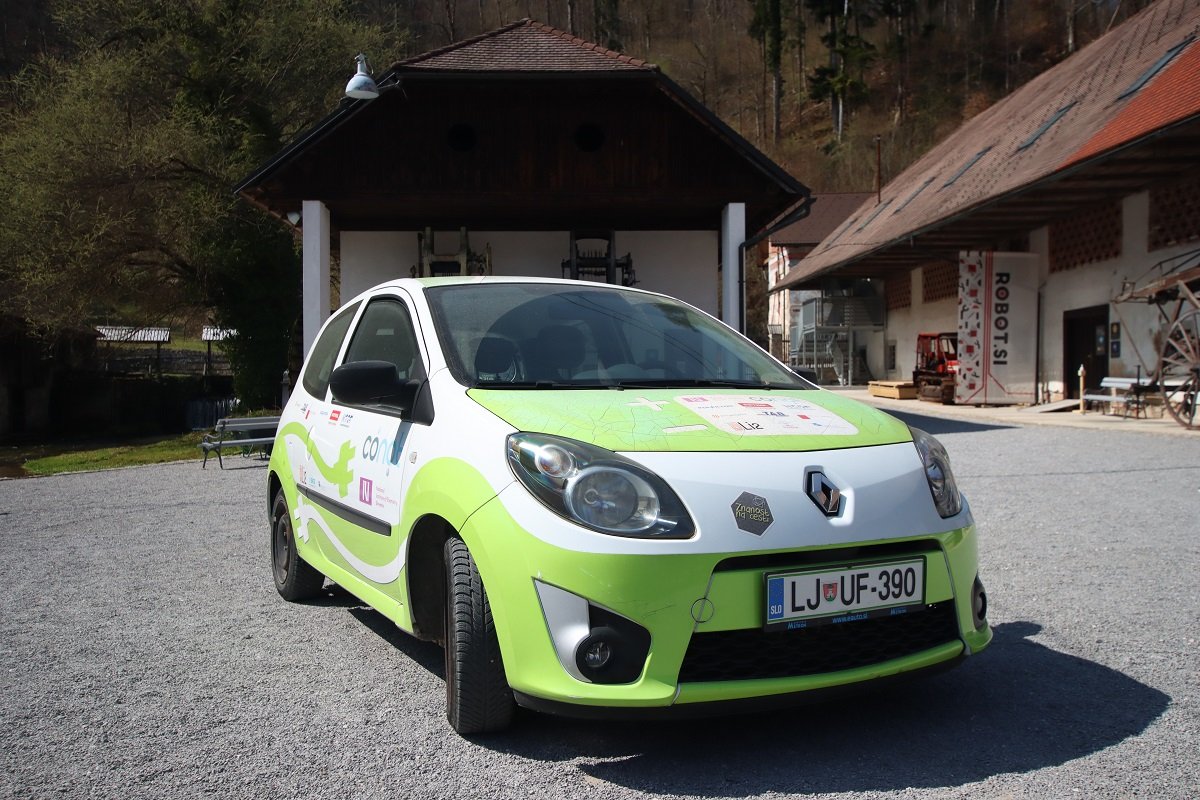
Ljubljana, 2nd April, 2021 - • The Renault Twingo, which appears completely normal at first glance but for the many stickers adorning it and making it highly noticeable, has been a real trademark of the Institute’s car park for the last decade. However, it is no longer there as of mid-October of last year. Since it was worn out and its regular maintenance was quite a handful, we had to find a new home for it. The Technical Museum in Bistra kindly gave it a roof over its head. The people there are more than thrilled about their new museum exhibit, which is a great promotion of Slovenian knowledge and zero-carbon technologies.
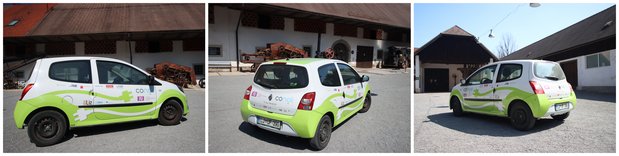
Photo source: Technical Museum of Slovenia
Twingo was not an ordinary car. It was one of the first electric cars almost entirely made of Slovenian components and, above all else, with Slovenian knowledge. That is why it can be referred to as a pioneer as well as a “learning” electric car. It is the result of the E-Mobility for Slovenia Project, which was undertaken in 2011 by a team of enthusiastic students from the Faculty of Mechanical Engineering in Ljubljana, the Faculty of Electrical Engineering and the Faculty of Chemistry and Chemical Technology. They rolled up their sleeves and, under the mentorship of colleagues from the University of Ljubljana, the Centre of Excellence for Low-Carbon Technologies and the Institute of Chemistry, assembled a city electric car from the once ordinary petrol Twingo. The powertrain was donated by the company Letrika from Šempeter pri Gorici, while the company Petrol enabled the student team to work in its car service workshop. In 2013, the team was awarded recognition for its contribution to the E-Mobility for Slovenia Project.
The electric Twingo was therefore a project which proved that e-mobility is an area in which Slovenian knowledge can yield top results. Our colleague Michel Adamič, who has been its caretaker for seven years, said: “The greatest gift of Twingo is an invaluable treasure trove of knowledge about the technology of electric vehicles, which are becoming a new reality in our everyday mobility. At the same time, its retirement is also symbolic because it heralds the end of the era of pioneers and the onset of industrial production of electric vehicles on a mass scale”.
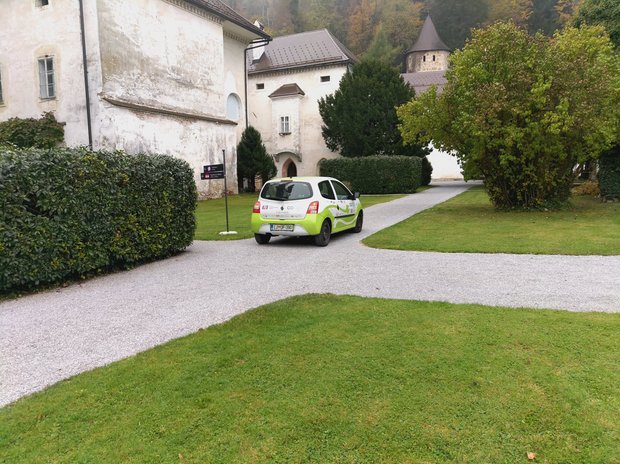
Photo source: Technical Museum of Slovenia