Strategic cooperation agreement with the Vesna Fund
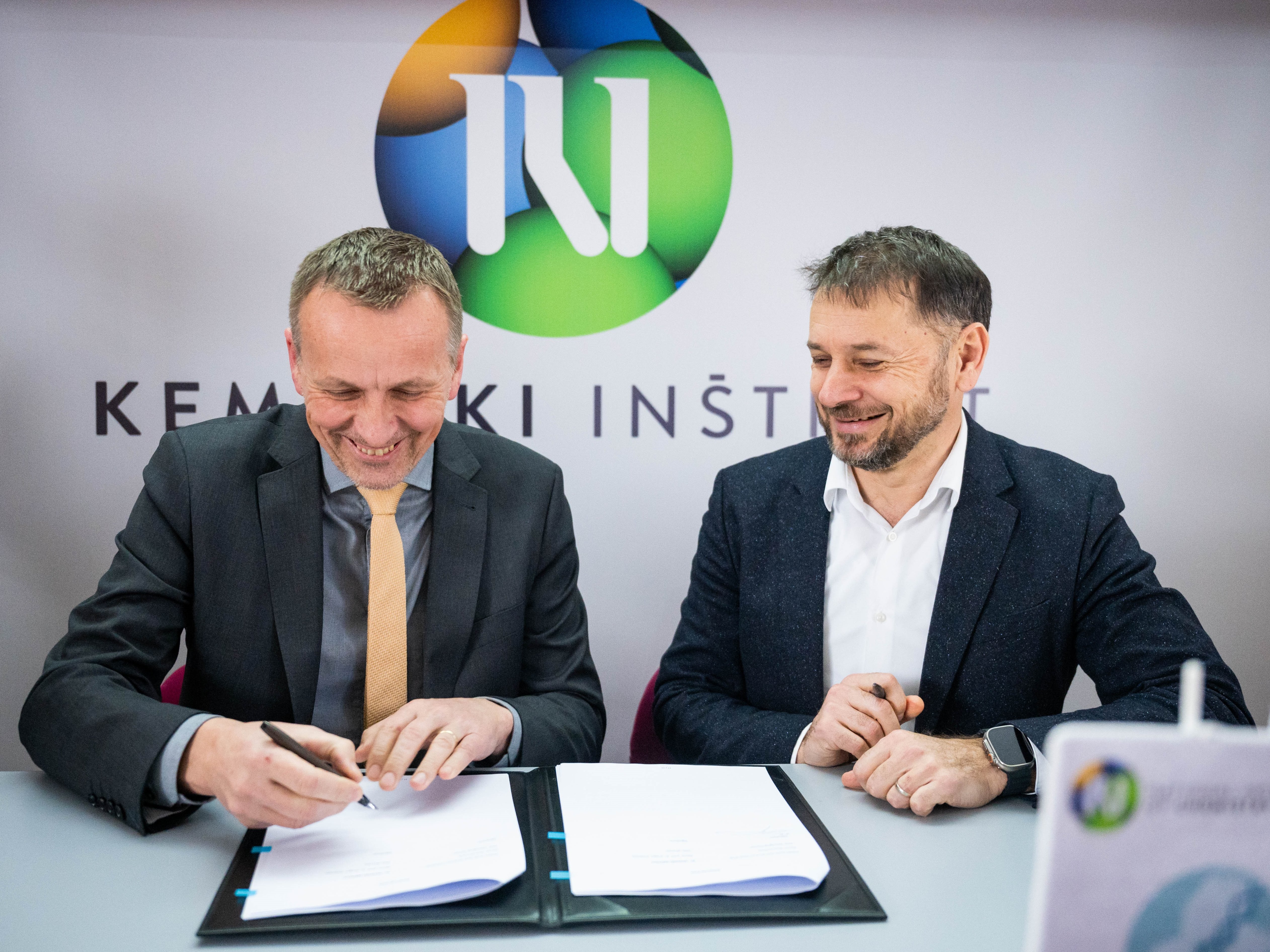
The National Institute of Chemistry presented selected innovations and signed a strategic cooperation agreement with the Vesna Technological Innovation Fund. Vesna is a venture capital fund focusing on the transfer of technologies from scientific institutions to the market, overcoming the common challenge of turning research into commercially viable products. It is dedicated to supporting the development and introduction of scientific and technological innovations in the fields of artificial intelligence, robotics, energy, healthcare, biomaterials, cybersecurity, and many others.
The collaboration between the National Institute of Chemistry and the Vesna VC DeepTech Fund is an important step in promoting the transfer of knowledge and promising new technologies from the laboratory to the market. The fund's main goal is to bring basic research to the highest technological readiness level (TRL 9), i.e. up to the commercialisation of solutions on the market or their use by end users. This is a stage that many research projects never reach, and the most common reason for this is lack of funding. With the cooperation and support of the Vesna Fund, even such projects will be able to develop their technological solutions to the stage of commercialisation.
Prof Gregor Anderluh, Director of the National Institute of Chemistry, emphasises that the partnership between the National Institute of Chemistry and the Vesna Foundation will make an important contribution to further strengthening the innovation environment in the country and help create a more technologically advanced society. "Innovations that emerge in an academic environment often have the potential to address important societal challenges. But this potential is a very uncertain start for a promising technology, despite all research efforts. Researchers are constantly faced with the challenge of bringing a ground-breaking idea to a level that meets the needs of the market. This is a major challenge and, above all, requires a large financial investment. The collaboration with the Vesna Fund will help to bridge this gap. The innovations developed in the laboratories of the National Institute of Chemistry will have a much better chance of surviving in the form of new products or services," says Anderluh.
"The public value of the Vesna Technology Innovation Fund is remarkable because it not only serves to foster innovation, support economic development and promote advances in sustainable technologies, but also plays a key role in stimulating the crucial process of technology transfer to the economy. This process is essential to bridge the gap between cutting-edge scientific research and practical, market-ready solutions, enabling the commercialisation of discoveries that would otherwise remain stuck in the lab. By transferring technologies from scientific institutions to the market, the fund addresses one of the biggest challenges of innovation: ensuring the practical application of breakthrough research results that drive social and economic progress," emphasises Dalibor Marijanović, Vesna Fund Partner.
He adds: "Technology transfer to the economy is essential to promote entrepreneurship, create high value-added jobs and stimulate industries that rely on advanced research and development. It also helps to shorten the time between discovery and practical application and ensures that innovations that address pressing societal challenges such as climate change, health and energy efficiency reach businesses and consumers faster. In addition, the Vesna Technology Innovation Fund facilitates collaboration between academia, industry and investors, creating a dynamic ecosystem in which ideas can flourish and lead to breakthrough change. This focus on technology transfer not only aims to strengthen economic competitiveness, but also ensures that scientific achievements are utilised for the common good, leading to a sustainable future and prosperity."
The promising innovations of the National Institute of Chemistry
To mark the signing of the strategic cooperation agreement with the Vesna Foundation, the Institute of Chemistry organised a conference at which researchers presented some promising innovations. The eight new technologies they presented were mainly in the fields of healthcare, advanced materials development and carbon-free technologies:
1. Bithiazoles for Improved Chemotherapy
2. CRISPR-Based System for Enhanced Genome Editing
3. Enhanced Electrocatalytic Materials for Green Hydrogen Production
4. Advanced Catalysts for More Efficient Electrolyzers: An Innovation for a Sustainable Future
5. Innovative Reprocessable Lignin-Based Bisphenol-Free Epoxy Resins for Construction and Coating Applications
6. Advanced Adsorbents for New Generation Thermal Batteries
7. Organic Cathode Materials for the New Generation of Batteries
8. Center for Development, Demonstrations and Training for Carbon-Free Technologies – Concept and Opportunities
The Vesna Fund has already supported MyCol, a spin-off company of the National Institute of Chemistry
Last year, the Vesna Fund already supported the spin-out company MyCol d.o.o. of the National Institute of Chemistry, which offers innovative solutions for sustainable visual temperature monitoring of objects by heating. These are critical temperature indicators that are affordable, sustainable and adaptable to different requirements. The seed investment agreement that the company has signed with the Vesna Fund will enable it to intensify the marketing and distribution of its products and expand its production for the first time, for which it lacked the resources and expertise.
Cover photo: Prof. Gregor Anderluh, Director of the National Institute of Chemistry (left) and Dalibor Marijanović, Vesna Fund Partner (right)
Photo: Boštjan Podlogar/STA