SAŠA Technology Forum 2026: National Institute of Chemistry Presents Opportunities for Biomass Biorefining in Velenje
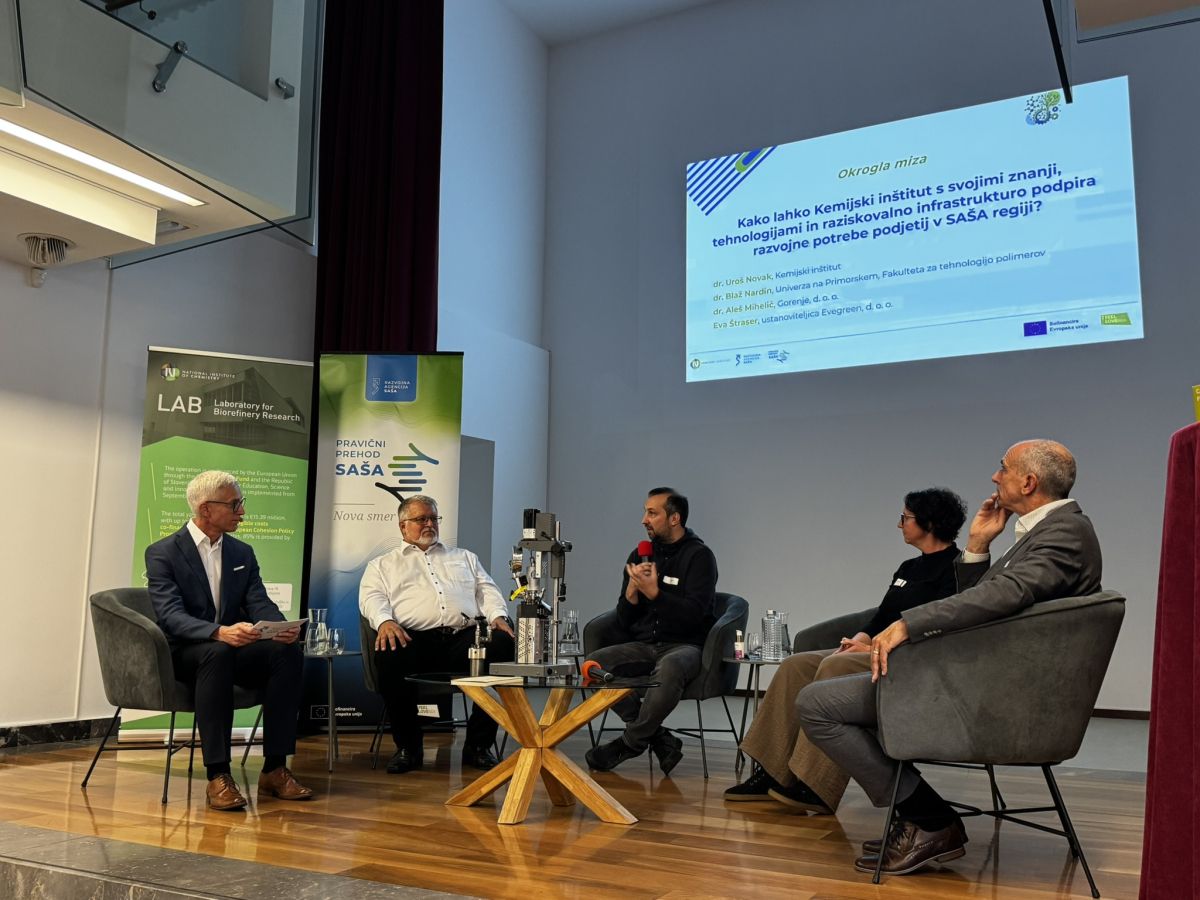
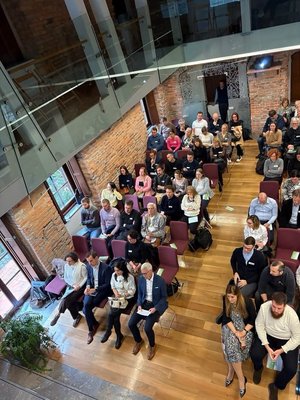
On Friday, 6 November 2026, the SAŠA Technology Forum 2026, entitled “Biomass for Materials and Chemicals”, took place at Vila Bianca in Velenje. The event, organised by the Just Transition Centre at the SAŠA Development Agency and the National Institute of Chemistry, brought together approximately 70 representatives of industry, research organisations and other development stakeholders. The forum focused on presenting the National Institute of Chemistry's new research unit in Velenje and discussing opportunities for using biomass to develop new materials and chemicals.
The forum opened with welcome addresses by Mag. Biljana Škarja, Director of the SAŠA Development Agency, and Aleksandra Vasiljević, Deputy Mayor of the Municipality of Velenje. Žiga Omladič from the Municipality of Velenje presented two development projects, Stara elektrarna – Centre of the Future and TECHUB, both part of the region's broader economic transformation.
Dr Aleš Štefančič presented the National Institute of Chemistry's new research unit, the Laboratory for Biomass Biorefining Research (LAB). He introduced the concept of a biorefinery, in which wood and other plant residues can serve as raw materials for producing chemicals, materials and other high-value products. He also outlined opportunities for collaboration between researchers at the National Institute of Chemistry and companies in the Savinja–Šalek region.
During the scientific presentations, researchers from the National Institute of Chemistry highlighted the potential of three key components of lignocellulosic biomass. Dr Edita Jasiukaitytė-Grojzdek discussed lignin as a source of aromatic chemicals and advanced materials, Dr Gregor Lavrič presented opportunities for using cellulose to develop bio-based materials, while Assoc. Prof. Dr Miha Grilc explained the potential of hemicelluloses for producing platform chemicals that can be further processed into various industrial products.
The second part of the event featured a roundtable discussion on concrete opportunities for collaboration between research and industry. The discussion brought together Dr Uroš Novak from the National Institute of Chemistry, Assoc. Prof. Dr Blaž Nardin from the Faculty of Polymer Technology, Dr Aleš Mihelič from Gorenje, and Eva Štraser, founder of EveGreen.
The panellists emphasised the importance of trust between research organisations and companies, as well as a willingness to develop new solutions. The discussion focused on joint research and development projects, knowledge and technology transfer, addressing specific technological challenges faced by companies, and opportunities to secure national and European funding. The establishment of the National Institute of Chemistry's new unit in Velenje will also create opportunities for young researchers, including the preparation of research projects, master's theses and doctoral dissertations.
The New Laboratory as Part of the Savinja-Šalek Region's Transformation
The National Institute of Chemistry plans to open the Laboratory for Biomass Biorefining Research (LAB) in the Stara vas Business Zone in Velenje in September 2027. The new research infrastructure will focus on developing technologies for converting biomass into high-value materials and chemicals, while connecting scientific expertise with the needs of industry.
The total investment amounts to €15.4 million, of which €13 million will come from non-repayable EU funding under the Just Transition Fund. The project includes the establishment of approximately 1,400 m² of specialised research and technical facilities and the acquisition of advanced research equipment. At least ten new jobs are planned, and the laboratory is expected to collaborate with more than 20 companies in transferring innovations into practice.
The establishment of the laboratory represents an important step in expanding the National Institute of Chemistry's research activities into the Savinja–Šalek region. By connecting scientific research, technological development and industry, it will contribute to the development of the circular bioeconomy and the economic transformation of the region, which is developing new industries and employment opportunities as it phases out coal.
The project is co-financed by the Republic of Slovenia, the Ministry of Higher Education, Science and Innovation, and the European Union under the European Cohesion Policy Programme 2021–2027, through the Just Transition Fund: http://evropskasredstva.si.