

Ultrasound-mediated control of engineered cells
[Translate to English:]
Achieving remote, precise control of cells within deep tissue remains a significant scientific challenge. Low-intensity pulsed ultrasound offers a promising solution for in vivo therapeutic applications due to its non-invasive nature and ability to stimulate cells with spatial and temporal precision deep within tissues.
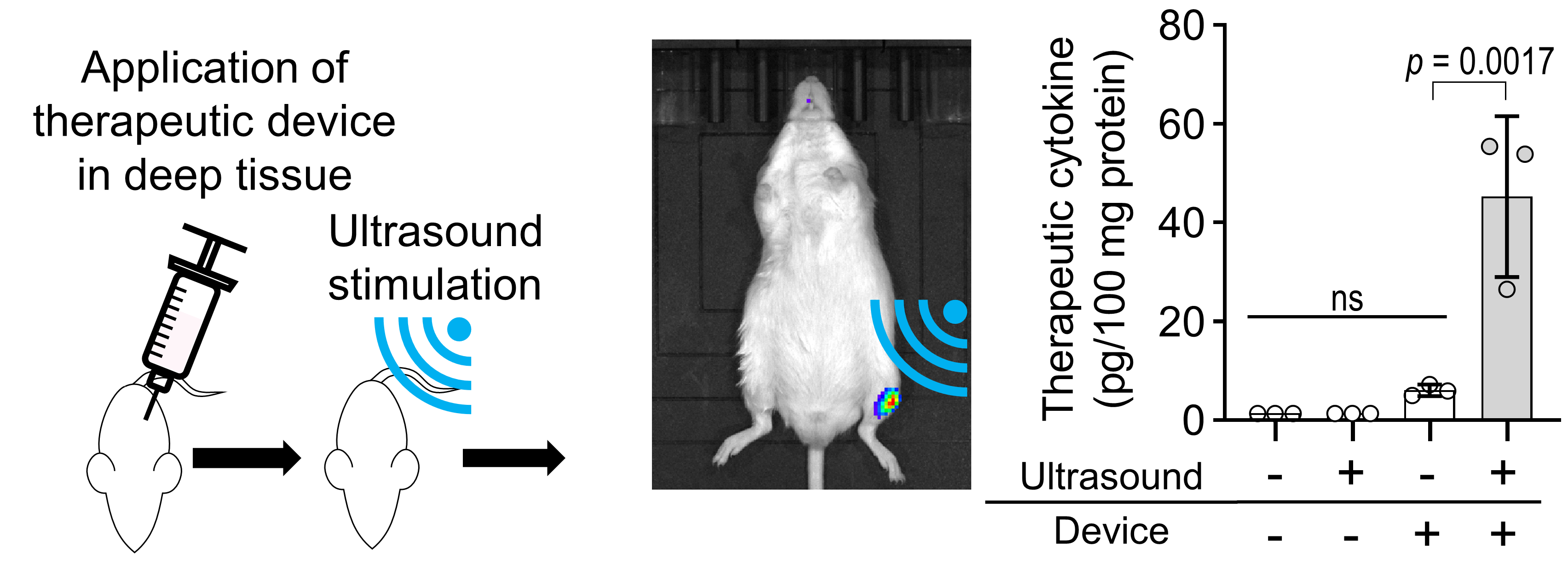
Researchers at the National Institute of Chemistry have harnessed pulsed ultrasound to regulate calcium influx in mammalian cells, engineering a therapeutic cellular device capable of responding to acoustic stimulation in deep tissue. By establishing specific ultrasound stimulation parameters, they successfully induced calcium influx in HEK293 cells and Jurkat T-cell line. Furthermore, they engineered human cells to express a custom-designed calcium-responsive transcription factor, which controls the expression of a therapeutic gene, forming a sophisticated therapeutic cellular device.
The innovative sonogenetic system was demonstrated in vivo in mice, where an implanted cellular device producing anti-inflammatory cytokine effectively alleviated acute colitis, showcasing the platform's potential for non-invasive deep-tissue stimulation of engineered cells. The success of this therapeutic cellular device underscores the potential of this approach for precise, targeted therapeutic delivery.
Tuning cells to respond to ultrasound represents a groundbreaking strategy with vast therapeutic potential, offering a powerful tool for precise and localized control of engineered cells in deep tissue. This research, conducted by Filip Ivanovski, Maja Meško, Tina Lebar, Marko Rupnik, Duško Lainšček, Miha Gradišek, Roman Jerala, and Mojca Benčina, was published in Nature Communications, https://doi.org/10.1038/s41467-024-51620-2.