

Winner of the Nobel Prize for Chemistry in 2013 is working with the Laboratory for Biocomputing and Bioinformatics
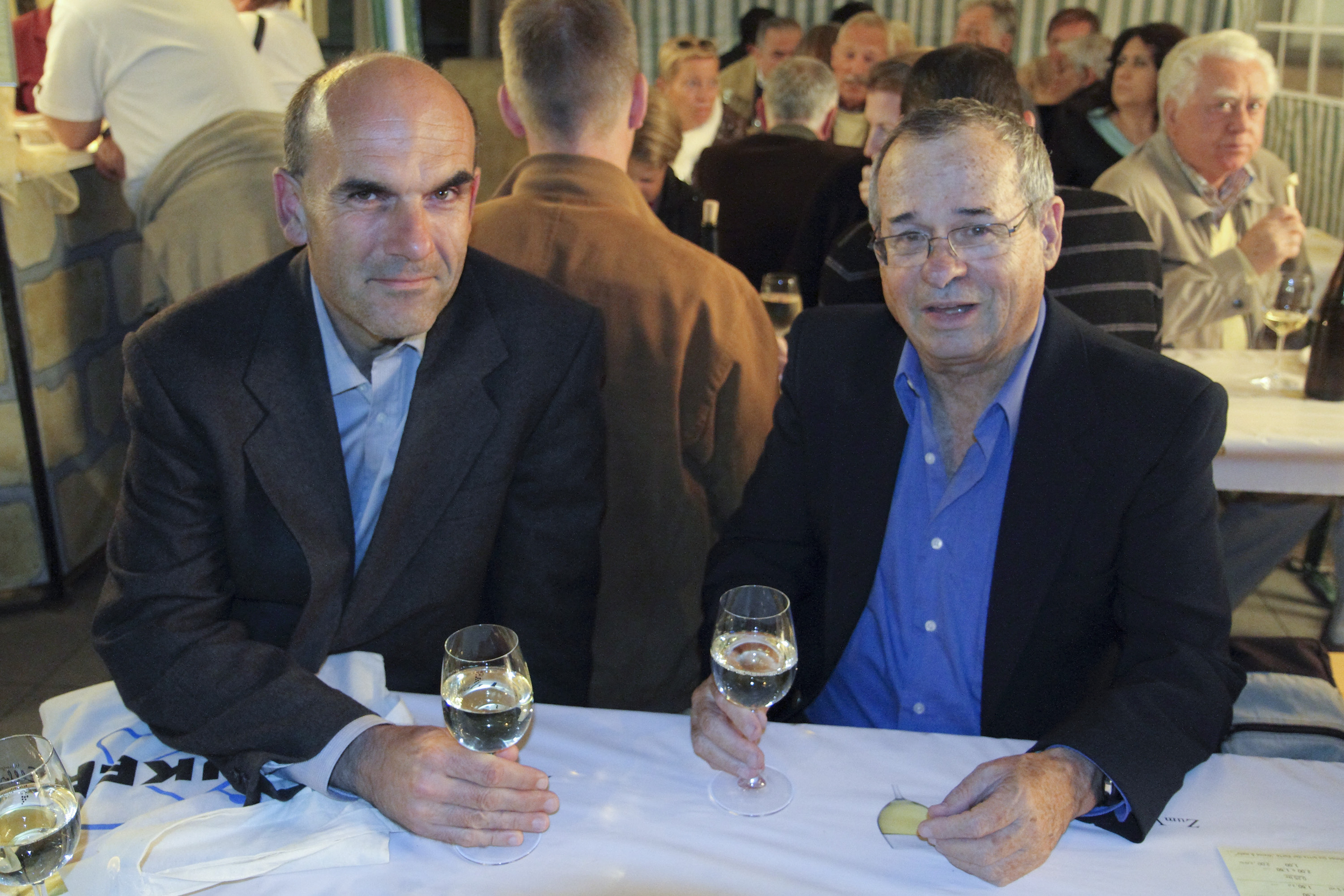
[Translate to English:] Arieh Warshel in Janez Mavri na konferenci "Quantum Atomic and Molecular Tunneling in Solids", Darmstadt, 2010.
Arieh Warshel, Distinguished Professor at the University of Southern California and member of the National Academy of Sciences is one of the three Chemistry Nobel prize laureates awarded for the development of multiscale models for complex chemical systems.
Prof. Warshel pioneered the research in the field of biomolecular simulation. Together with the co-laureate Prof. Michael Levitt he developed the first hybrid QM/MM methodology, enabling accurate computational assessment of chemical properties and reactivity in enzyme centers based on quantum-mechanical principles in conjunction with the empirical force field representation of the macromolecular and solvent environment. The work and experience of Prof. Warshel paved the way for establishing molecular simulation as an important tool for the understanding of structure and catalytic activity of enzymes, the binding of drugs, dynamics of ion channels and other biological processes. Since many aspects related to the structure and functionality of biological systems remain poorly understood, molecular suimulation represents an important support for experimental techniques; in some cases detailed information at the atomic or subatomic level is only accessible to computational methods. Information acquired by molecular simulation can be used in the applied research in a variety of disciplines, among the rest in drug design.
Prof. Warshel's studies of enzyme catalysis yields growing evidence that the enzyme action is entirely governed by preorganized electrostatics rather than by dynamical effects; this is in accord with the available experimental data. Thus, Prof. Warshel's expertize is also relevant for the theoretical foundation of biomolecular processes.
Laboratory of biocomputing and bioinformatics (L01) at the National Institute of Chemistry has been for long collabortating with Prof. Warshel and his group. In 2004 the head of the group Dr. Janez Mavri joined Prof. Warshel's group as Fullbright Fellow. In the last years our collaboration was enhanced by highly ranked joint publications and frequent visits between the members of both groups. In 2007 Prof. Warshel visited National Institute of Chemistry and delivered an invided lecture there.
Our research group extensively uses Warshel's Empirical Valence Bond simulation methodology implemented in the program package Molaris, which is one of the most efficient tools for computational enzymology. The focal point of our research using Warshel's state-of-the-art methods is the mechanism of action of flavoenzymes involved in neurodegenerative processes and related to Parkinson and Alzheimer diseases. Implementation of Warshel's approach into studies of biological processes now represents the fundamental research interest of the L01 group, benefiting from his collaboration, consult and help.
We are honored and proud to share part of Prof. Warshel's impressive expertize and to implement and further develop it in the Slovenian research environment.
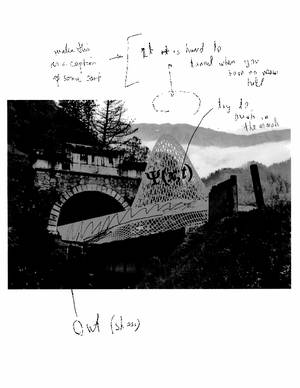
Cover page draft intended for for FEBS Letters with hand written comments of Arieh Warshel. Figure shows railway tunnel Podbrdo with a proton wavefunction as a model for proton tunneling in the enzyme active center (dr. Jernej Stare, private communication).