

Catalytic Wet Torrefaction of Biomass Waste
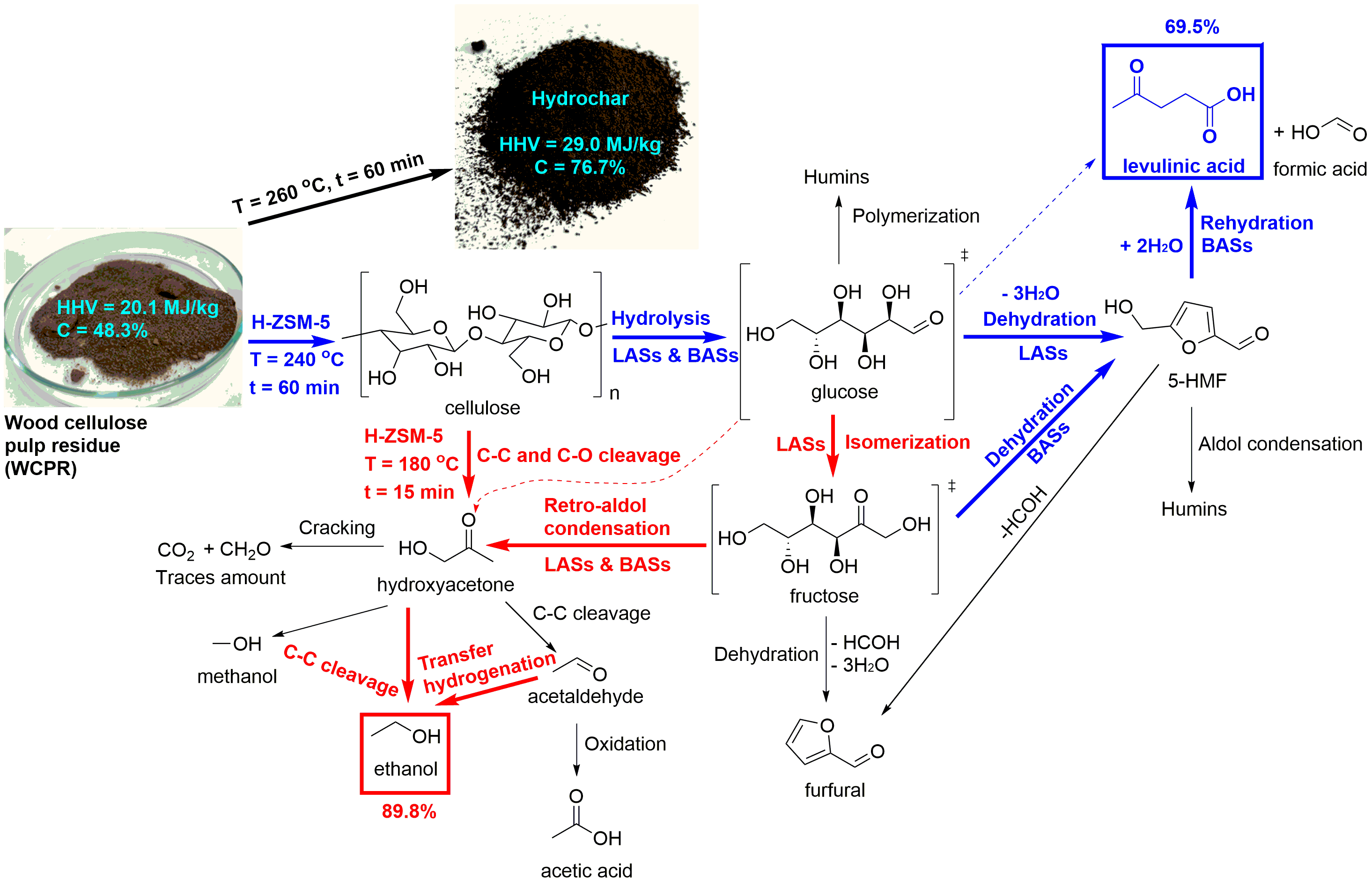
Efforts towards creating a sustainable society pivot on efficient chemical and fuel production from renewable cellulosic biomass, necessitating innovative transformation routes from cellulose. In this study, conducted by Andrii Kostyniuk and Blaž Likozar at the Department of Catalysis and Chemical Reaction Engineering, National Institute of Chemistry, we introduce a pioneering chemocatalytic method utilizing an H-ZSM-5 catalyst within a batch reactor under a nitrogen atmosphere for simultaneous one-pot generation of levulinic acid (LA) and/or ethanol during wet torrefaction (WT) of wood cellulose pulp residue (WCPR).
We elucidate optimal conditions and outcomes of our method, highlighting its significance in addressing the challenges of sustainable fuel production. By exploring WT parameters including temperature range (180 to 260 °C), H2O/WCPR ratio (10), and reaction durations (15 to 60 min), we identified exceptional selectivity for bio-ethanol production at 180 °C and 15 min, achieving an outstanding 89.8% selectivity with H-ZSM-5 catalyst. Moreover, we demonstrate significant LA formation at 240 °C after 60 min. Comprehensive hydrochar assessments encompassing various parameters such as higher heating values (HHVs), decarbonization, dehydrogenation, deoxygenation, and carbon enrichment provide insights into the quality of solid fuel obtained.
Our research, conducted by Andrii Kostyniuk and Blaž Likozar at the Department of Catalysis and Chemical Reaction Engineering, National Institute of Chemistry, offers a promising pathway towards efficient production of ethanol and LA from renewable cellulosic biomass, reducing reliance on fossil resources. The proposed reaction pathway underscores the direct cellulose conversion into hydroxyacetone and subsequent ethanol generation, emphasizing the potential for sustainable and environmentally friendly fuel production.