

INSRTR: new technological platform for the regulation of protein function with potential use in biomedicine and biotechnology
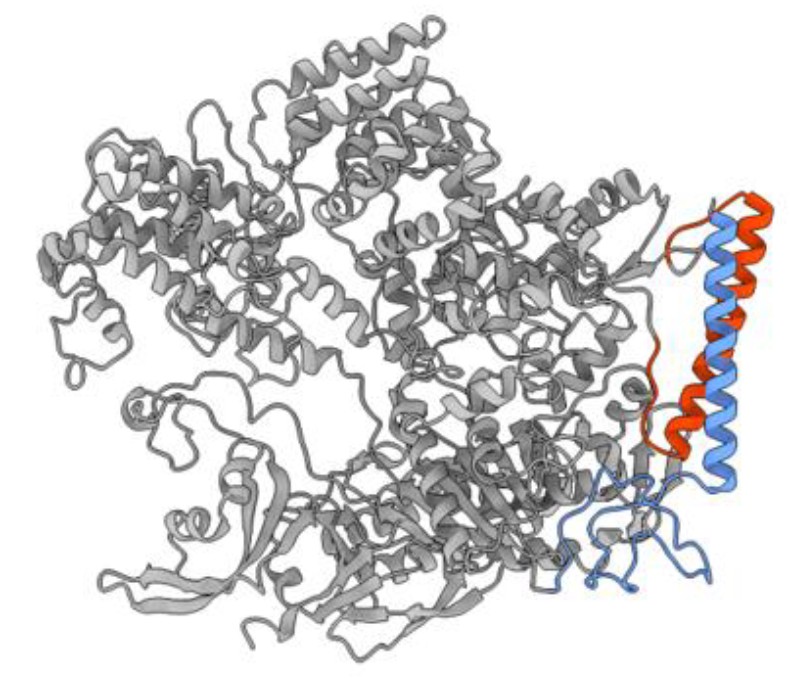
Schematic illustration of the structure engineered molecular scissors Cas9 regulated through binding of the peptide to the insert (red).
Proteins play a key role in all processes in all living organisms; in cellular metabolism, cellular structure formation, recognition, immune response and regulation of other cellular processes. The ability to regulate protein function holds the key to regulating life. Many biological drugs are proteins. Researchers from the National Institute of Chemistry discovered and published in the prestigious scientific journal Cell Discovery a new technology for the regulation of function of diverse proteins, which they named INSRTR, where the function of the protein can be regulated via a short inserted peptide, similar to transistors in electronic circuits. They can either turn the function of a selected protein ON or OFF, and combine them to perform logical operations in living cells.
The new technology was demonstrated in human cells on several enzymes, proteins in cell signaling, DNA recognition and antibodies, used to direct cancer immunotherapy. In cooperation with the researchers of the Jožef Stefan Institute, they prepared a web server that, based on machine learning methods, enables researchers to select the best insertion sites in target proteins. The researchers believe that the INSRTR technology, for which they have also filed a patent application, will be very useful both for therapy and for other biotechnological applications.
The authors of the paper are Tjaša Plaper, Estera Merljak, Tina Fink, Tadej Satler, Ajasja Ljubetič, Duško Lainšček, Vid Jazbec, Mojca Benčina and Roman Jerala from the Department of Synthetic Biology and Immunology at the National Institute of Chemistry and Sintija Stevanoska and Sašo Džeroski from JSI. The research will be presented at the National Institute of Chemistry on January 25, 2024 within the Forum 40 lectures by dr. Tjaša Plaper, who shares the first authorship of the article with Estera Merljak and Tina Fink.
Link to the paper: https://rdcu.be/dv8ER