

Microplastics also in hail
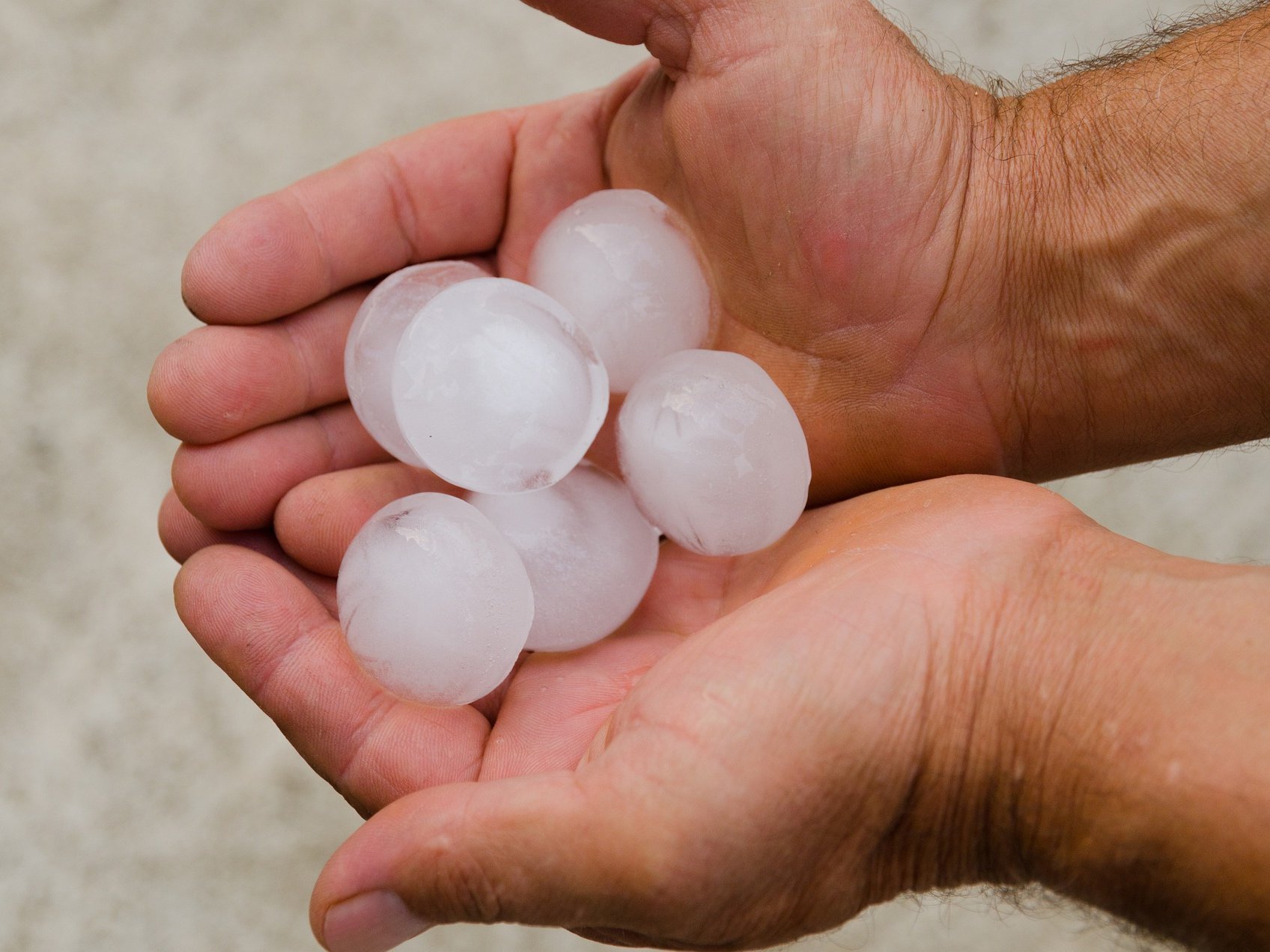
Slovenian researchers from the Institute of Water, the Jožef Stefan Institute, the Faculty of Chemistry and Chemical Technology, Omega d.o.o., the Faculty of Biotechnology and The National Institute of Chemistry were the first in the world to prove that microplastics are also present in hail. They studied the composition of the huge hailstorm that caused damage in the White Landscape in 2019. This hail had a diameter of ten centimetres or more and caused significant damage in some places along the Kolpa River.
The Coating Development Laboratory at the Institute of Chemistry showed that this hail contained not only ice, but also many microplastic particles of anthropological origin and various microorganisms. Among other things, fibres from clothing dyed with dyes from the textile industry were found in the sampled hailstones.
Microplastic particles could be a factor in the formation of such thick hailstones. Undoubtedly, this approach is an important step towards a comprehensive understanding of what is happening in our environment and the extent of human pollution.
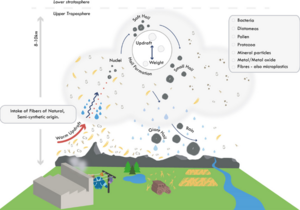
The article titled Dissecting giant hailstones: A glimpse into the troposphere with its diverse bacterial communities and fibrous microplastics was published in the journal Science of The Total Environment (IF 10,7).
Link to article:
https://www.sciencedirect.com/science/article/pii/S0048969722058855
Video of the press conference:
https://www.youtube.com/watch?v=Ggv8OrsbzC4&t=2s
More information: ivan.jerman(at)ki.si