

Professor Emeritus Dušan Hadži passed away
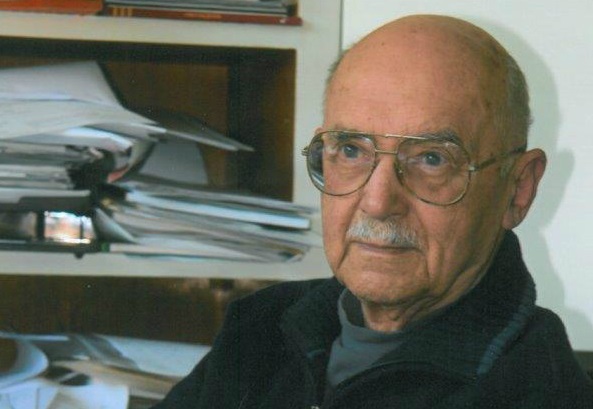
We are saddened to inform you our Professor Emeritus Dušan Hadži passed away on September 24, 2019. Hadži, 98, was a prominent researcher and he left a large impact on the hydrogen bond research. He remains an unforgettable personality.
He was born in Ljubljana, Slovenia, Yugoslavia on August 26, 1921. On completing his secondary education in 1939, Hadži began studying medicine at the Faculty of Medicine. In 1942, he also started studying Chemistry and Physics at the Faculty of Arts of the University of Ljubljana, where he graduated in 1944. After two years of military service, Hadži spent a year as Researcher in the Belgrade-based Directorate of Medical Manufacturing Laboratory. In 1948 he was appointed Assistant at the newly established Institute of Chemistry of the Slovenian Academy of Sciences and Arts. During the 1950, he spent three months with Professors Freyman and Barchewitz (Rennes, Paris), training infrared spectroscopy, and in the year 1950/51, he continued his training under Prof. Norman Sheppard (Cambridge, the United Kingdom). In 1953, Hadži was the first doctoral candidate to earn Ph.D. from the Slovenian Academy of Sciences and Arts in accordance with the applicable legislation at the time. The same year, he was elected Assistant Professor of Physical Organic Chemistry at the Ljubljana Faculty of Arts. He continued working as Head of the Structural Chemistry Laboratory of the National Institute of Chemistry, where the newly acquired infrared spectrometer facilitated a new research direction. In 1980 he became Dr.h.C. at the Uppsala University.
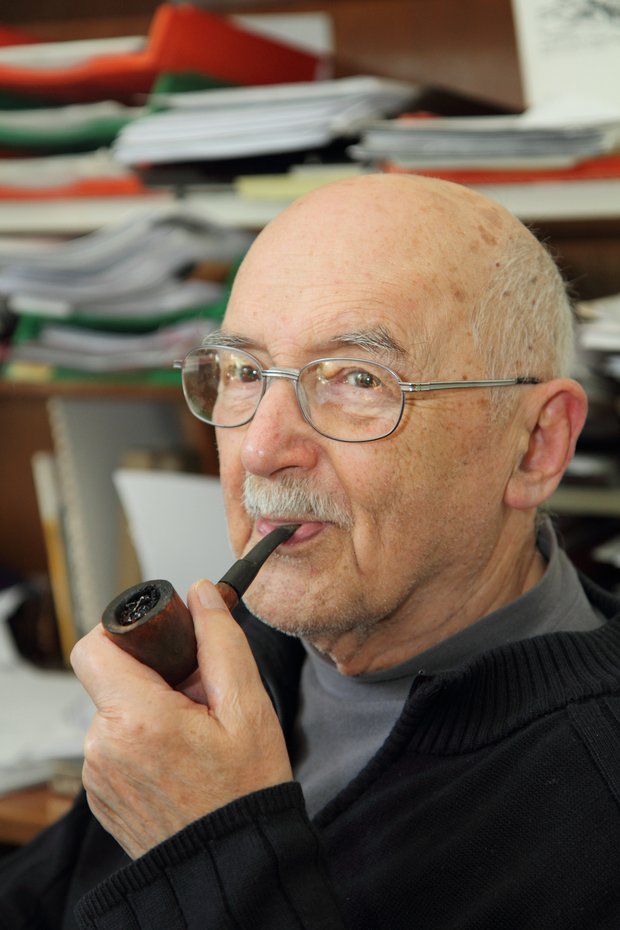
In 1957, Hadži organized the first international congress on hydrogen bonding in Ljubljana, which was the first international scientific meeting in Slovenia, as well as the first gathering of researchers from both, the Eastern as well as the Western Bloc. In 1979 he organized the third conference Horizons in Hydrogen Bond Research that took place in the littoral town of Ankaran. Hadži spent the academic year 1960/61 at the Mellon Institute (Pittsburgh, Pennsylvania) with Prof. Foil A. Miller, studying systems with strong hydrogen bonds by applying the far infrared region. In 1962, he was elected Full Professor of the new subject “Atomic and Molecular Structure”. With the acquisition of the first digital computer in Slovenia, Hadži was able to expand the research program of his structural chemistry laboratory with the introduction of quantum chemical calculations, and, after organizing the second international congress for its use in chemistry – the use of computers in artificial intelligence, especially spectroscopic analysis. He expanded the experimental program by acquiring a nuclear magnetic resonance spectrometer, in 1969. Hadži stopped lecturing at the Faculty of Chemistry and Chemical Technology in 1982 and accepted the post of Expert Research Advisor at Lek Pharmaceuticals, from which he retired in 1992. He continued research work at the National Institute of Chemistry Laboratory.
Hadži’s first research subject was the chemistry of Slovenian-produced coal and the mechanism of coke, which, at the time, was a developmentally relevant topic. It soon became obvious that Slovenian- produced coal is unsuitable for coke production, and the interest in the afore-mentioned topic soon expired. However, Hadži managed to generate through infrared spectroscopy enough generally interesting data on metallurgical coke formation mechanisms, to write a dissertation and publish the results in an international journal. While working in Cambridge, Hadži encountered the hydrogen bond problem, which, at the time, was in its initial developmental stages. Infrared spectroscopy has been, to this day, one of the most useful methods for discovering the incidence of hydrogen bonding, and particularly proton dynamics in them, as well as their influence on physical characteristics and chemical and biochemical processes. Hadži directed his attention to strong hydrogen bonds and was among the first to prove the existence of the symmetric hydrogen bond in crystals. Processing infrared spectra of multiple strong hydrogen bonds lead him to propose the systemization of strong hydrogen bonds on the basis of spectral characteristics, which has been in general use to the present day. In addition to infrared spectroscopy, Hadži and colleagues also used quantum chemical calculations and NMR. This was possible due to the well-equipped and well-staffed laboratory at the Boris Kidrič Institute of Chemistry which also enabled in research of hydrogen bonds. This also facilitated an expansion to a new research area, molecular pharmacology, most particularly the electronic description of the structural characteristics of all pharmacological substances, essential for specific bonding onto receptors. Parallel to this, Hadži continued researching strong hydrogen bonds. He devoted most of his time to the research thereof after retiring in 1992. Hadži and colleagues published over 230 original scientific articles, mostly in international magazines. He organized five international congresses and edited five books, which were published by international publishers. After retiring, he once again directed his professional attention to strong hydrogen bonds.
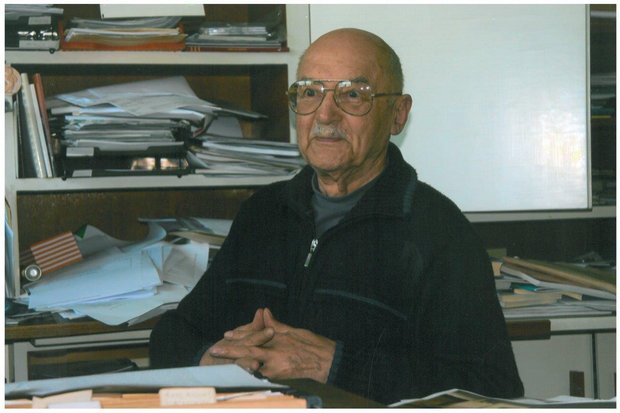
Dušan Hadži was Member of the Slovenian Academy of Sciences and Arts since 1974, Serbian Academy of Sciences and Arts since 1979, and the former Yugoslav Academy of Sciences and Arts since 1975, member of the Indian Academy of Sciences (1980) and the Macedonian Academy of Sciences and Arts (2005). He was President of the Slovenian Chemical Society (1974–1986) and was elected Honorary President. He was also President of the Union of Chemical Societies of Yugoslavia (1970–74). Hadži was Honorary Member (2001) and Researcher Emeritus (2011) of the Institute of Chemistry and Honorary Member of the Slovenian Biophysicists Association (1996). He was awarded the Boris Kidrič Fund Award (1958), the Kidrič Award (1976), the Lifetime Achievement Award of the Republic of Slovenia (1994), the AVNOJ Award (1988) and the Pregl Award (2007) of the Institute of Chemistry. The Croatian Chemical Society honored Hadži with the Božo Težak Award and Plaque (1994). He was awarded the Yugoslav Order of Merits for the People with Sliver Rays and Order of the Republic with Golden Rays.
The mourning session in memory of prof. dr. Dušan Hadži will be held on Monday, October 7, 2019, at 11am at the Great Lecture Hall of the National Institute of Chemistry.
We will miss his knowledge, experience, encouragement and vitality.
Let him rest in peace!
Co-workers