Science Without Borders: What Can Slovenia’s Research Community Offer the World, and What Can It Learn from Others?
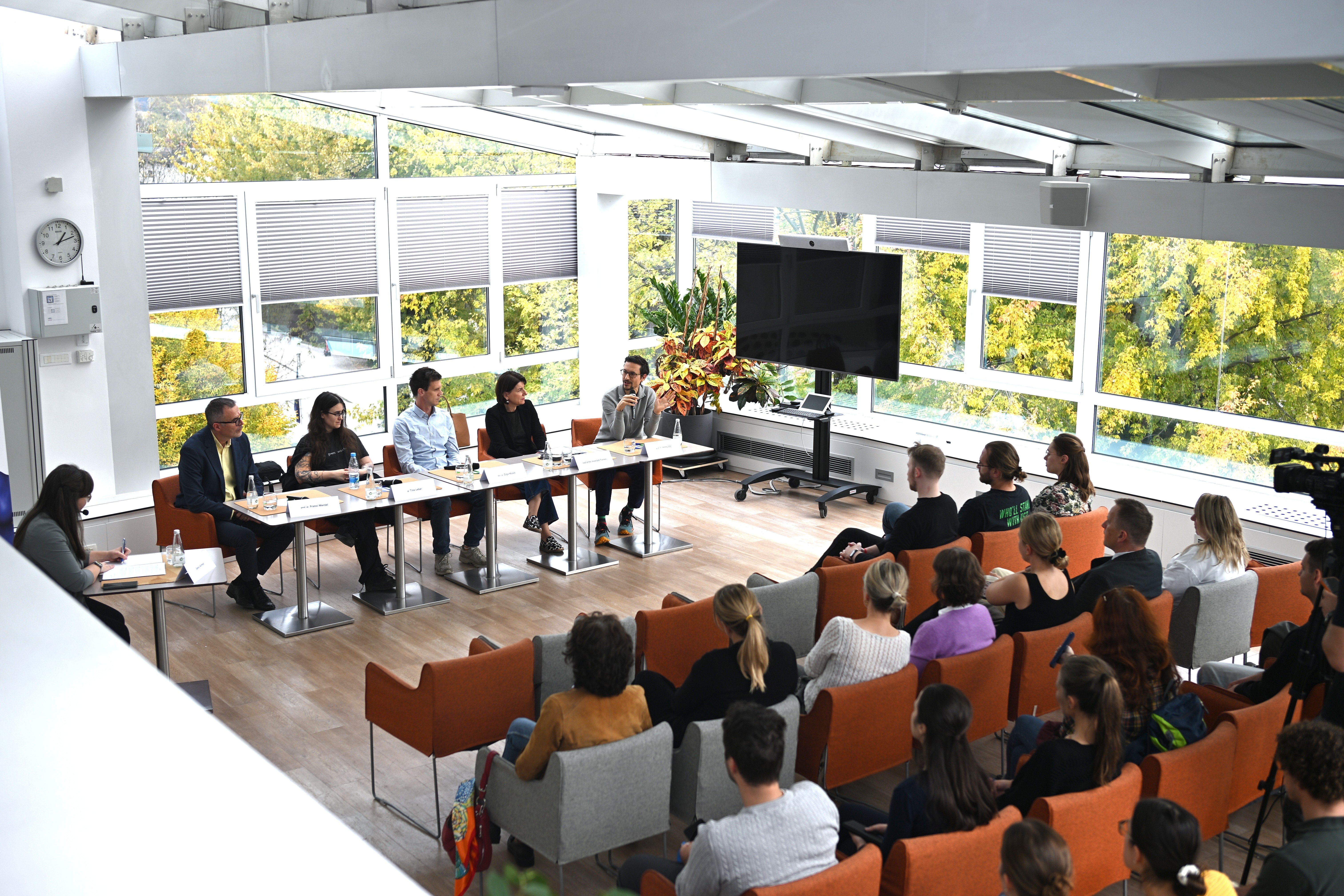
How do research environments in Slovenia and abroad differ? What do researchers need to succeed, and how can international experience contribute to the development of Slovenian science? These and other questions were discussed on 27 October at the National Institute of Chemistry during the roundtable Science Without Borders – How We Conduct Research at Home and Abroad, organised as part of the Science Is Cool 2.0 project.
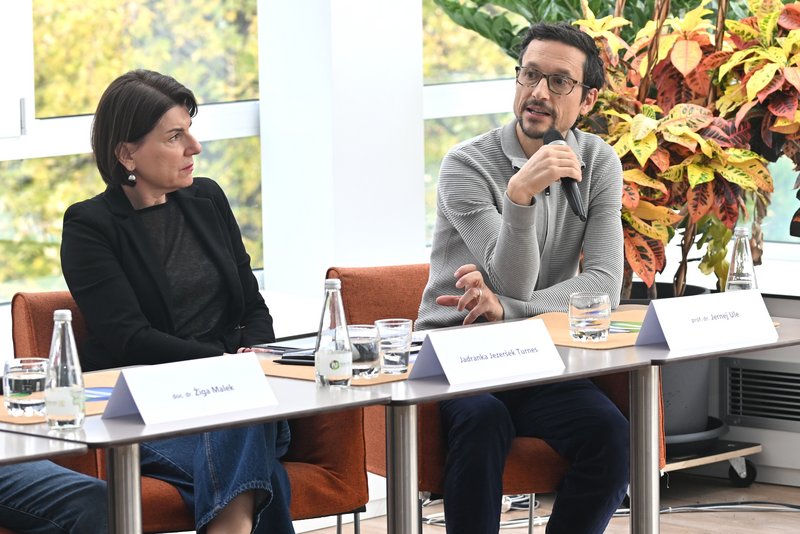
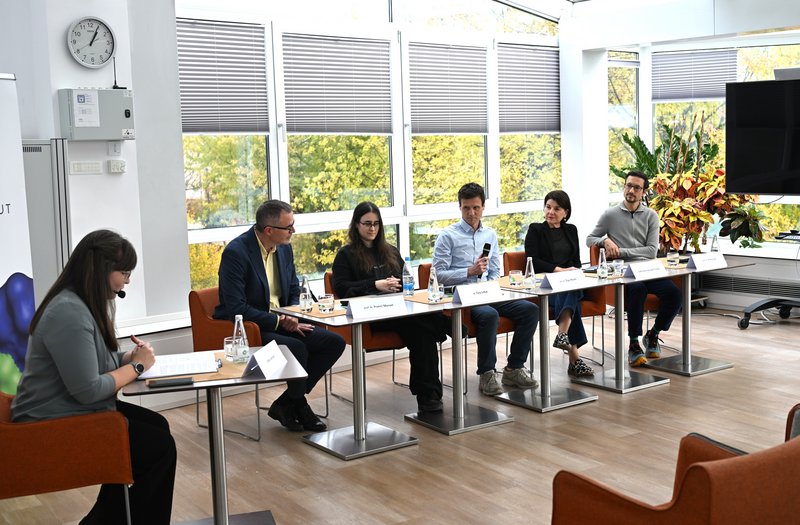
The roundtable brought together researchers with extensive international experience – Prof. Franci Merzel, Dr. Tina Lebar, Assist. Prof. Žiga Malek and Prof. Jernej Ule – alongside science communication and science diplomacy expert Jadranka Jezeršek Turnes, MSc. Moderated by Sanja Gornjec from the Slovenian Press Agency (STA), the discussion explored differences between research environments, the importance of international collaboration, and the opportunities and challenges facing Slovenia's research community.
Openness, Ambition and Research Freedom
One of the central themes of the discussion was research culture. The panellists highlighted that international experience offers researchers not only new knowledge but also different approaches to thinking, collaboration and formulating research questions.
“I would highlight the ambition in formulating research questions and the innovative approaches to answering them,” said Dr. Tina Lebar, reflecting on her experience in the American research environment. She also emphasised the importance of open communication, where researchers feel comfortable asking questions, expressing doubts and critically discussing research ideas.
At the same time, Slovenia's research environment has evolved considerably over recent decades. As Dr. Ule pointed out, successful research today does not necessarily depend primarily on the country in which it is conducted, but also on the institution, the support it provides and its flexibility.
“Things no longer depend so much on the country you work in, but on the institution and the support you have,” he said. He added that researchers benefit from a long-term vision that allows them to pursue their own ideas and develop their research without constant pressure to deliver short-term results.
International Collaboration Opens Doors That Would Otherwise Remain Closed
International collaboration offers researchers more than opportunities to exchange ideas. It also provides access to research infrastructure and expertise that may not be available in their home institutions.
One example is the partnership between Slovenian research institutions and the Institut Laue-Langevin (ILL) in Grenoble, which enables Slovenian researchers to conduct demanding experiments using specialised research equipment. As Dr. Merzel explained, researchers gain not only access to infrastructure but also expert support and opportunities to collaborate with the international research community.
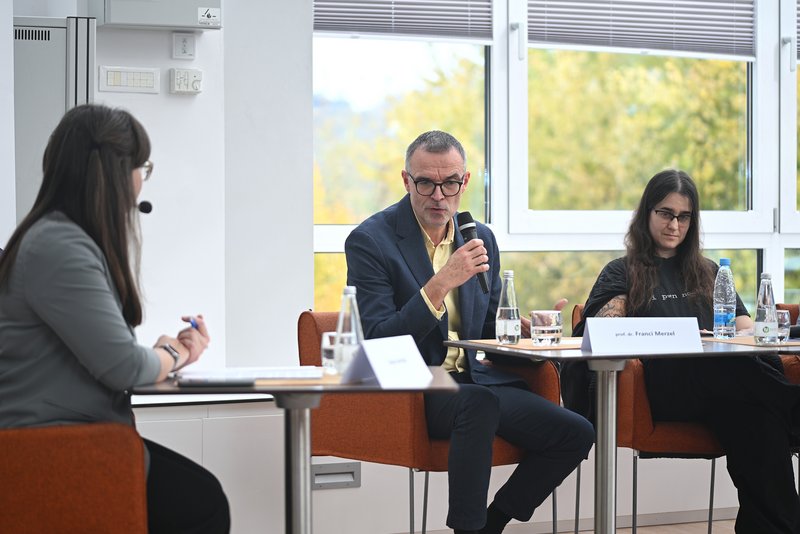
Another important topic was the conditions researchers need to thrive. The panellists emphasised that, alongside adequate funding, a predictable research system, high-quality mentorship, opportunities for independent research and suitable living conditions are essential.
Particular attention was given to the return of Slovenian researchers from abroad. Funding mechanisms such as the Dr. Aleš Debeljak scheme and European Research Council (ERC) grants play an important role in enabling researchers to return to Slovenia, pursue their own research ideas and establish independent research groups. However, the speakers also cautioned that time-limited project funding does not, in itself, guarantee long-term career stability.
Science As a Bridge Between Countries
International collaboration extends beyond research itself. Science diplomacy also plays an important role by connecting scientific knowledge and cooperation with international relations and public policymaking.
“Where politics has torn down bridges, science can help rebuild them,” emphasised Jadranka Jezeršek Turnes.
The panellists highlighted that researchers working internationally can also strengthen Slovenia's visibility and reputation abroad. Research institutions have a key role to play in recognising the value of international connections, developing strategic partnerships and communicating scientific findings effectively to society and policymakers.
Science Without Borders, But Not Without Challenges
The discussion demonstrated that international collaboration is not simply a one-way transfer of knowledge from abroad to Slovenia. Slovenian research institutions and researchers can also make significant contributions to the wider international research community through their expertise, innovative ideas and research practices.
The speakers also stressed that the role of science extends beyond driving economic growth and developing new technologies. Science must also identify risks and limitations, even when its findings are inconvenient for society or policymakers.
“We need to listen to science even when it says no,” emphasised Dr. Malek, citing the example of experts warning against construction in flood-prone areas. Science does not always provide the answers we want to hear, but such findings are essential for responsible decision-making.
The panellists agreed that scientific progress requires openness, trust, long-term support and a willingness to collaborate. Only under these conditions can science effectively address questions that transcend national, institutional and disciplinary boundaries and contribute to the development of society.
If you missed the roundtable, you can watch it on STA Youtube channel: https://www.youtube.com/watch?v=zZAFePSGbPA
The event was organised as part of the Science Is Cool 2.0 (Znanost je kul 2.0) project, co-funded by the Slovenian Research and Innovation Agency (ARIS) under its 2026 public call for the co-financing of science popularisation and communication activities.