

Jutranja kava s prof. dr. Juretom Zupanom: Nevronske mreže
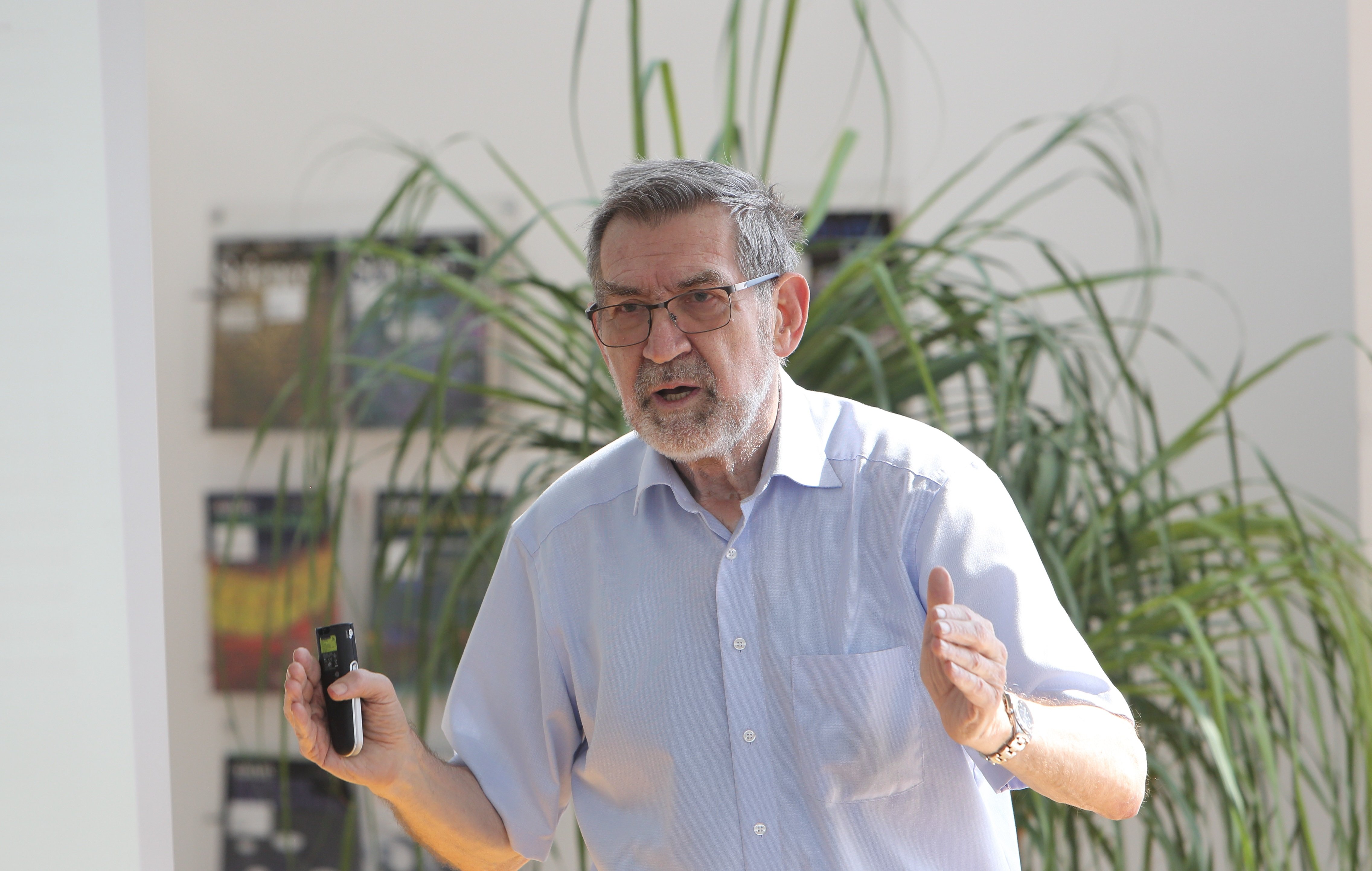
Predavatelj: prof. dr. Jure Zupan
Naslov: Vzponi in padci pri raziskavah umetnih nevronskih mrež (UNM)
Title: Ups an Downs of Artificial Neural Networks (ANN) Research
Datum: torek, 1.6.2021 ob 10.00
Meeting link: ki-si.webex.com/ki-si/j.php
Meeting number (access code): 163 192 8610
Meeting password: kemijski2021
Povzetek / Summary:
Podan je pogled na vzroke uspehov in padcev rezultatov raziskav UNM, ki so si sledili zaradi hitrih navdušenj in kasnejših razočaranj pogojenih z neizpolnjenimi pričakovanji. Zanimivo je, da so ponovni vzponi bili vselej posledica upornih posameznikov, ki so usmerili raziskave z novimi idejami v nove smeri. Kot prve veljajo raziskave ameriškega psihologa Williama Jamesa leta 1880. Pol stoletja kasneje, leta 1943, sta W. McCulloch in W. Pitts predstavila nevrone kot logično vezje. Kasneje Resenblat (1958) na podlagi Hebbovega pravila (1945) postavi prvo računalniško simulacijo UNM (perceptronov). Tovrstne raziskave članek, ki ga 1969 objavita Minsky in Papert, ustavi raziskave UNM za celo desetletje. Sledijo imena, kot so Hopfield, Rumelhart in Kohonen, ki po letu 1982 zopet postavijo UNM v žarišče raziskav umetne inteligence.
Zaradi zastoja pri izboljšavah rezultatov se po letu 2000 zanimanje za UNM tako močno zmanjša, da nekaj revij preneha objavljati prispevke, ki imajo v naslovu ‘nevronske mreže’. S skrbnimi analizami starih konceptov UNM skupine okrog Hintona in LeCuna uvedejo nova teoretična spoznanja (novo aktivacijsko funkcijo imenovano ReLU (‘rectified logical unit’: (f(x)=max(0,x)) in nove tehnološke dosežke (paralelno računanje, kombinacijo nadzorovanega in nenadzorovanega učenja ter ogromne baze podatkov).
S temi novostmi lahko obdelujejo nevronske mreže z nekaj desetinami skoraj skritih plasti, ki vsebujejo mreže z nekaj milijardami nevronov, kar prej ni bilo mogoče. To novo, ti. ‘globoko učenje’, je v zadnjih petnajstih letih postavilo UNM zopet v žarišče umetne inteligence. Med uspehi strategije ‘globokega učenja’ lahko omenimo tudi program AlphaGo osnovan na tej strategiji, ki je leta 2015 v igri go premagal svetovnega prvaka.
-----
An overview of the artificial neural network (ANN) research is presented. The impulses for the restart of the ANN research in the new paths was always brought up by the individuals refusing to give up the willing to do research by trying new ideas. As the first scientist the psychologist W. James who already in 1880 suggested that the sum of input pulses can be the cause of the size of the neurons output can be mentioned. More than half a century later based on the Hebb’s rule (from 1945) Rosenblatt (1958) set up the first computer simulation of ANN (perceptrons). In 1969 the promising research of ANN was virtually stopped for more than a decade by the paper of Minsky and Papert showing that the perceptrons even theoretically are not able to distinguish between the connected and unconnected forms. Following the so called ANN winter the researchers like Hopfield, Rumelhart and Kohonen, introducing the nonlinearity into the response function of neurons, brought the ANNs into the focus of AI research again.
In spite of the great expectation for ANNs the performances of ANNs in the next decades did not met the promises and the interest for ANNs by the AI researchers dropped again that in the first decade of the new century several journals did not want to publish papers with the ANN in theirs title! After a very thorough analysis of the old ANN concepts the groups around Geoffrey Hinton and Yann LeCun introduce new theoretical concepts (new neuron’s activation called ReLU (‘rectified logical unit’: (f(x)=max(0,x)) and new technological improvements and possibilities (parallel computation, combination of the supervised-unsupervised learning and availability of huge data bases).
Employing all these novelties the ANNs with tens of hidden layers containing hundreds of millions neurons each of them can be trained with millions of image patterns. The new so called deep learning algorithms brought ANNs againg to the top of AI research interest. The most publicized success comes in 2015 when the AlphaGo program based on the ANNs using this e deep-learning technology beat the world champion in the game of go.
Po predavanju bodo možna tudi vprašanja in diskusija.